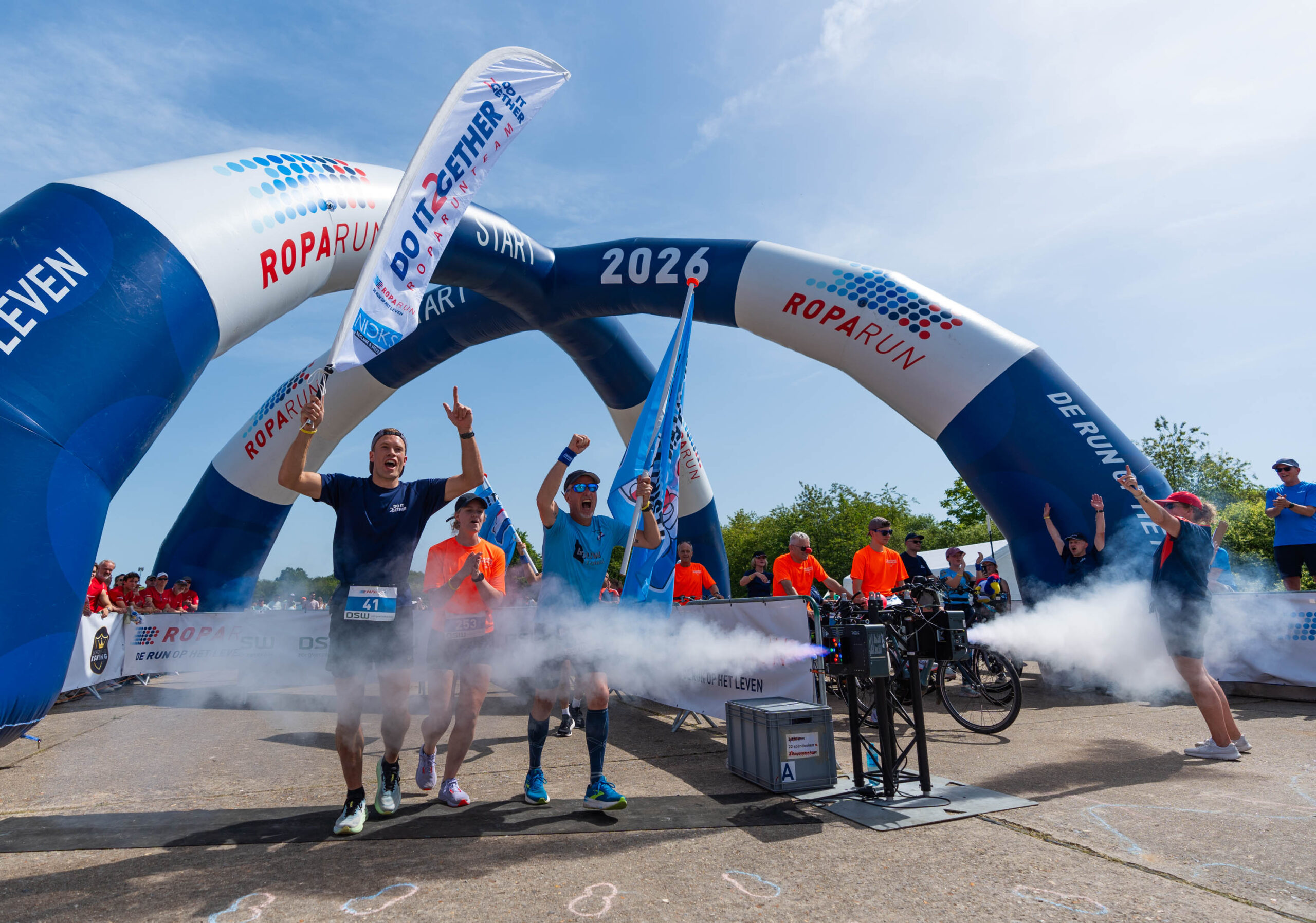
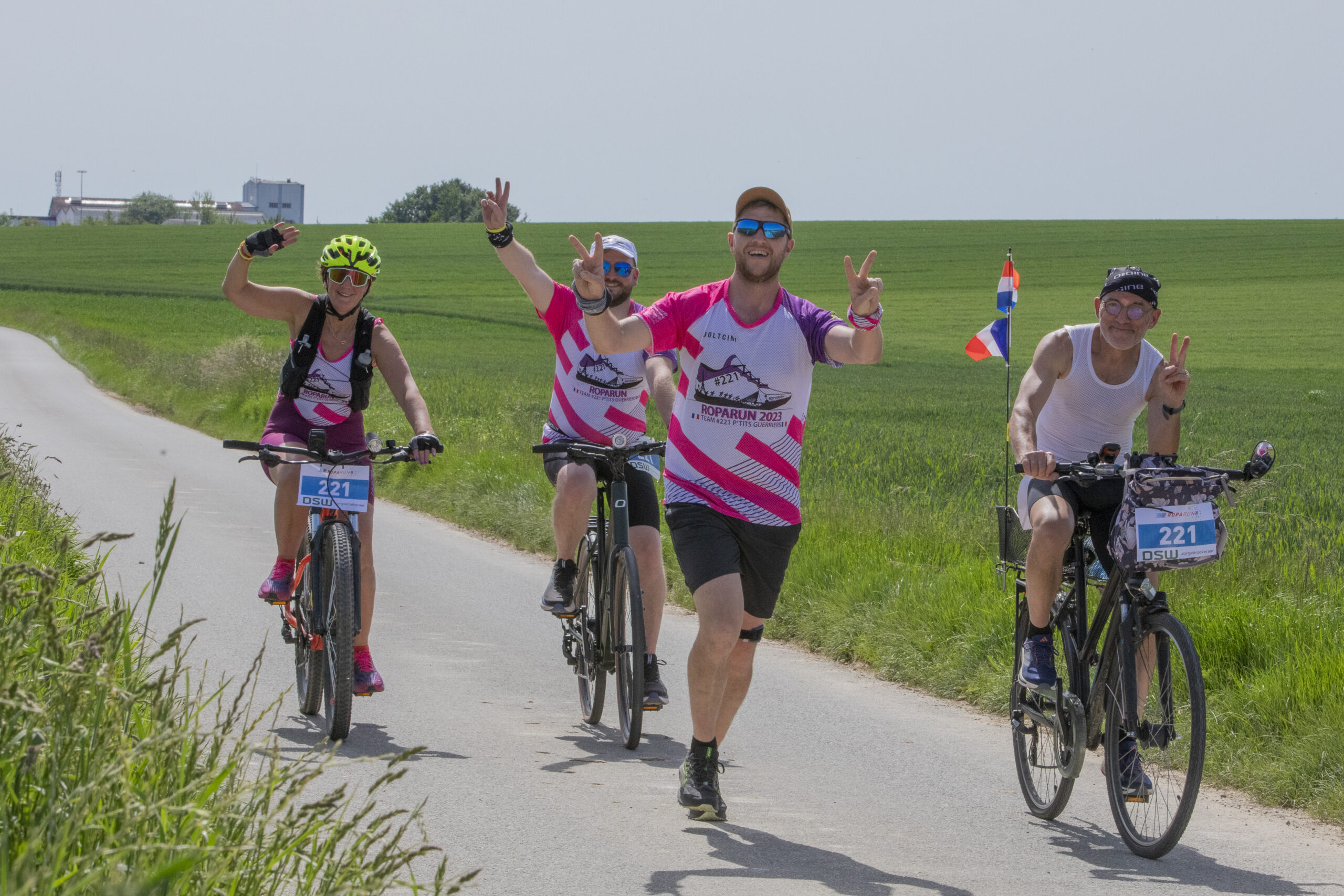
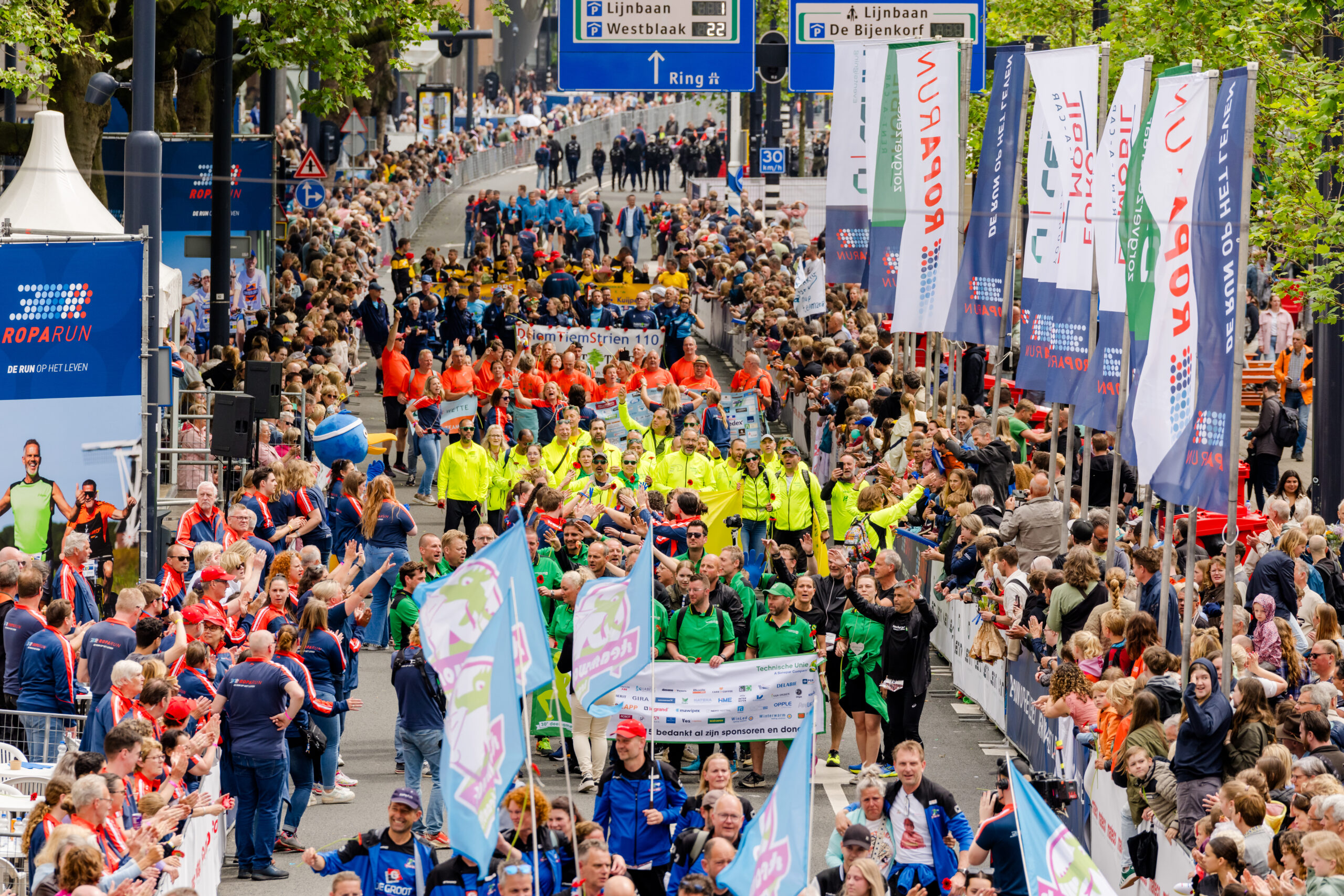
Whit Monday in Rotterdam belongs to the Roparun. Hundreds of running teams with thousands of participants set off from Paris or Enschede and finish in Rotterdam. Every team has cyclists who accompany the runners along the way. On the Coolsingel, they receive a rousing welcome from an enthusiastic crowd. With this 500-kilometre relay run, the teams raise money for people living with cancer. In 2026, the total raised exceeded five million euros.
The Roparun adds to Rotterdam's positive image: a city that not only wants to move forward, but also looks out for others.
It all started as a joke.
“Shall we do it? You, me and a few others?”
Peter van der Noord’s outstretched hand was met with a firm handshake from Sjaak Bril. And with that, something began. A beginning full of adventure, hope, perseverance and connection. The fact that Sjaak had dropped out of the Rotterdam Marathon after 25 kilometres became the reason for that bet. “What a guy you are,” Peter joked. “First bragging like a tough guy and then dropping out halfway. If you’re a real man, you’ll run from the Euromast to the Eiffel Tower.”
No one could have imagined where those words would lead.
That is how it began, 36 years ago in 1992, at the lunch table of a security company in Rotterdam-Overschie. Peter van der Noord and Sjaak Bril, both of whom have since passed away from cancer, could never have known that their bet would grow into an event that would set thousands of people in motion.
Thea van der Noord, Peter’s wife, still clearly remembers Peter coming home that evening. “I was used to quite a lot. Peter was always coming home with crazy ideas,” she laughs. “I thought: fine, have fun, do your best. He always said that if you really want something, you can make it happen. He could picture it immediately. We needed to find eight runners, so we could divide the kilometres between them. We found them in our circle of friends just like that. And then we thought: well, we’ll just do it. Take a car, bring a map, and it’ll all work out somehow.”
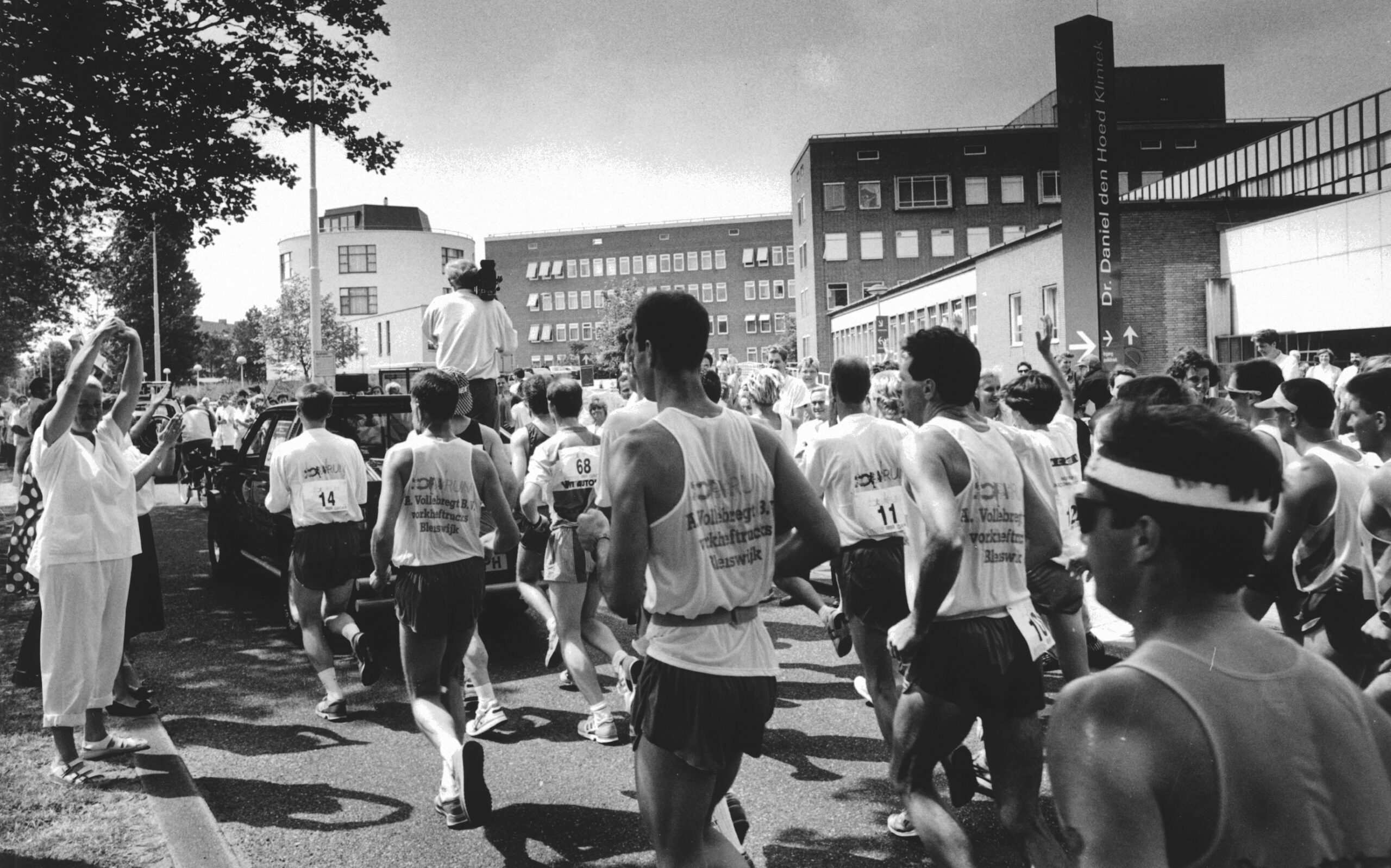
Training had to begin. And the news that a group of men wanted to run from the Netherlands to France spread through Rotterdam at lightning speed. More and more people wanted to join. With that, the challenges grew too. Equipment, catering, safety, transport, routes, permits: it quickly became a logistical tour de force.
“Peter and I went out to explore the route,” Thea says. “Notebook in hand, writing everything down. Street names, church on the left, field on the right, turns and directions. Our living room in Vlaardingen became the Roparun office. Meetings were held there, plans were made and things were improvised. Everything was arranged off the cuff. Simply: we’ll see how it goes.”
Thirteen teams and twenty volunteers took part in the first edition. Long-distance runners? Not exactly. Most of them were ordinary joggers. People who ran a lap around the Kralingse Plas on a Sunday morning and then proudly told everyone what a world-class achievement they had just delivered.
But this was something else entirely.
A charity was also connected to the event. Peter and Sjaak quickly agreed on the cause: the Rotterdam Daniel den Hoed Clinic needed infusion pumps, so that cancer patients would not always have to remain in hospital. Participants collected donations from friends, colleagues and family, at sports clubs and on the Lijnbaan.
“We felt it was important that all the money raised would go directly to the charity,” Thea says. The first newsletter therefore made it clear: all costs of the event were to be covered by the participants themselves.
Op donderdagochtend 27 mei 1992 verzamelden de deelnemers zich aan de voet van de Euromast. Op de Parkkade stonden lopers, fietsers, vrijwilligers, begeleiders en belangstellenden uit de hele stad. Iedereen wilde zien of ze het echt zouden doen.
“Dat er zoveel mensen kwamen, vonden we vooral grappig”, zegt Thea. “Zenuwachtig waren we niet. Daar waren we te nuchter voor. Peter was vooral zenuwachtig omdat hij moest hardlopen. Door alle voorbereidingen had hij nauwelijks getraind.”
Zo zet de Roparun Rotterdam op de kaart als stad met een groot hart en een mentaliteit die ver voorbij de stadsgrenzen wordt herkend.
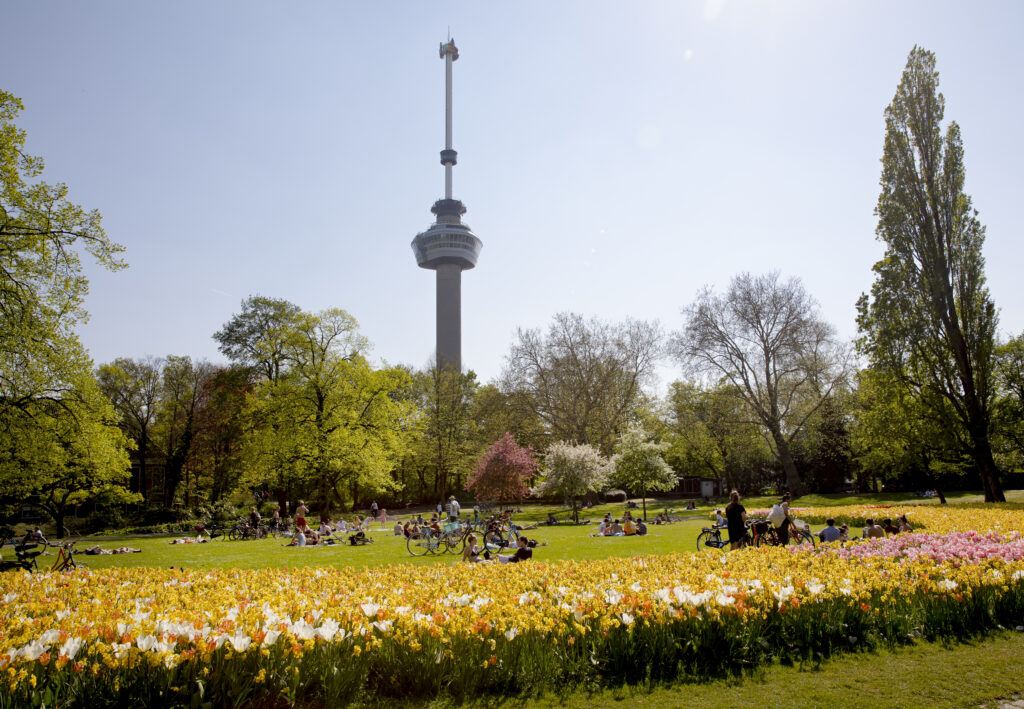
On Thursday morning, 27 May 1992, the participants gathered at the foot of the Euromast. On the Parkkade stood runners, cyclists, volunteers, support crews and curious onlookers from across the city. Everyone wanted to see whether they would really go through with it.
“We mostly thought it was funny that so many people had shown up,” says Thea. “We weren’t nervous. We were far too down-to-earth for that. Peter was mainly nervous about the fact that he actually had to run. Because of all the preparations, he had barely trained.”
The starting shot was supposed to be fired by Mayor Bram Peper, but he arrived late. Main sponsor Theo Stuyvers did the honours instead. Until the Pascalweg in Rotterdam-Zuid, all the runners stayed together. From there, the relay continued via Barendrecht, the Hoeksche Waard and Brabant towards Belgium and France.
With improvised team vehicles, checkpoints, tents and kitchens, the adventure truly began.
“There were no showers,” Thea recalls. “At the Belgian border we slept in a truck parking area. Participants walked into a working car wash to shower. The foam came up to our ankles. There was hardly any communication. Only when you bumped into each other could you make arrangements. We just laughed about it.”
It had the charm of the Elfstedentocht, but with more pleasant temperatures. It was chaotic, clumsy and at times completely unprepared. But above all, it was beautiful.
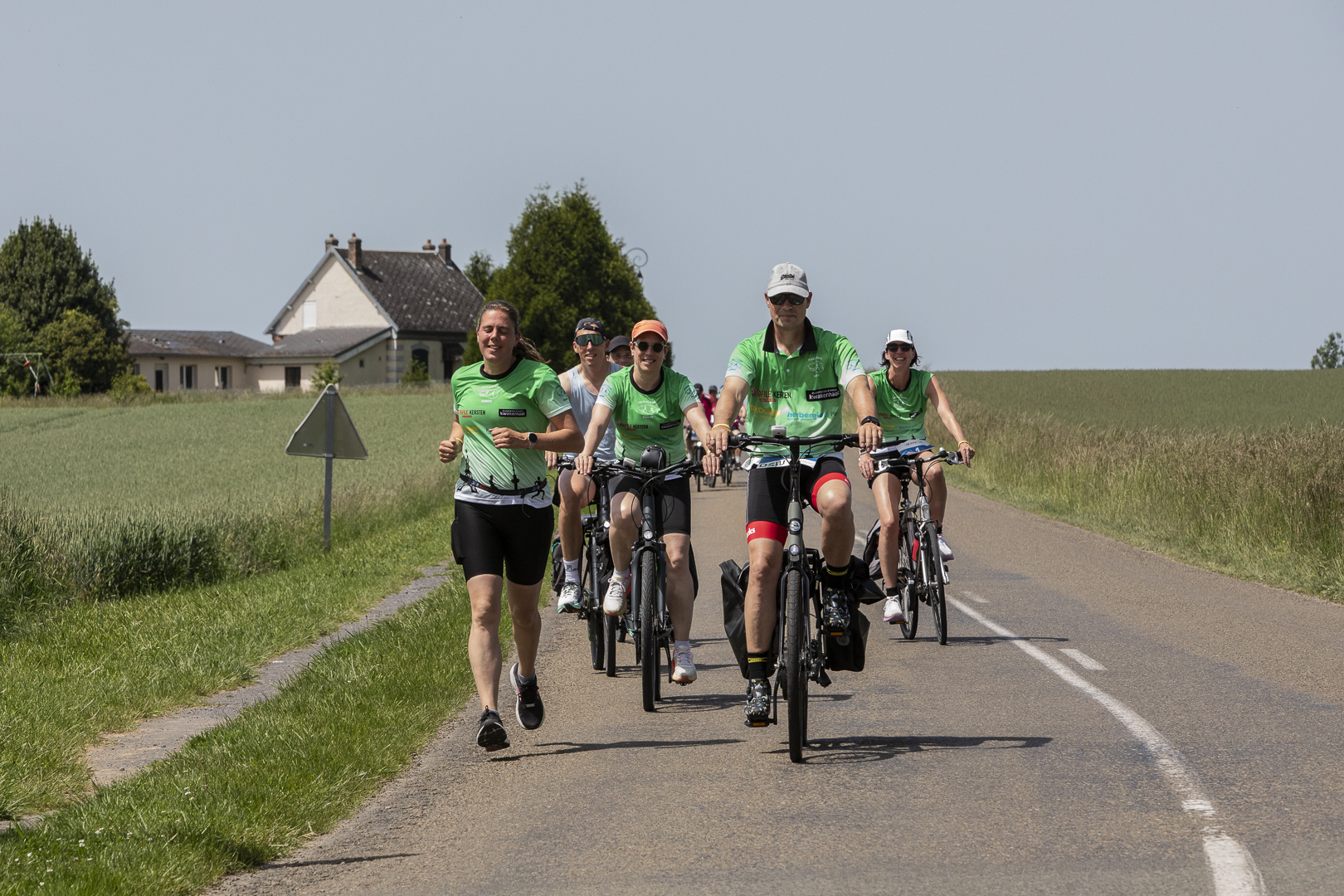
In France, residents watched in amazement as hundreds of Dutch people passed through sleepy villages and rolling landscapes. Explaining what they were doing was almost impossible. “We could understand a little French,” says Thea. “Speaking it? Not a chance.”
Only when the top of the Eiffel Tower came closer did the Roparunners realise they had done something truly special. On Sunday, 31 May 1992, the teams finished in Paris. Runners threw their shoes into the trees, grown men fell into each other’s arms in tears, and volunteers built an improvised finish line at the Champ de Mars using a few crowd-control barriers and some barrier tape.
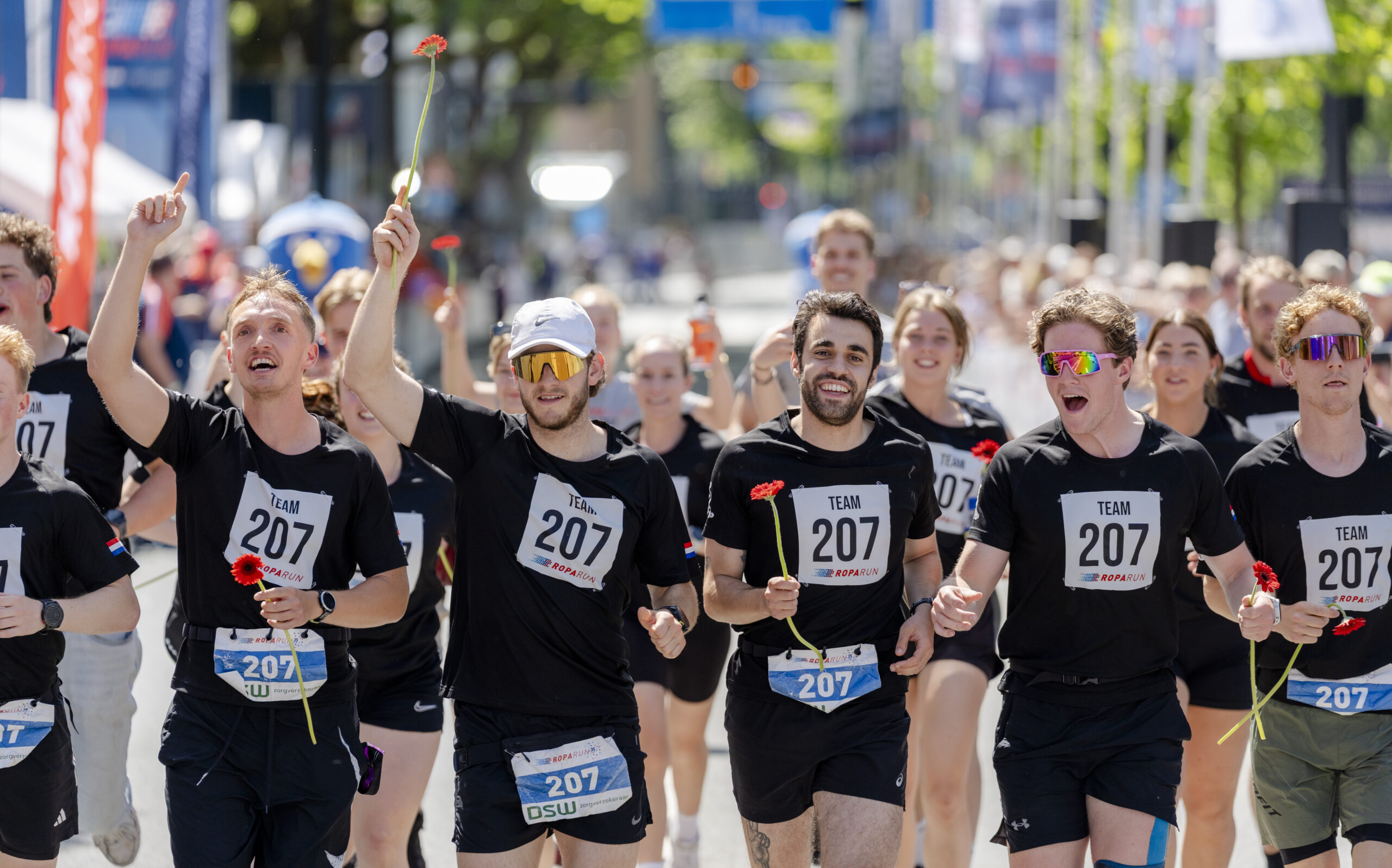
“Peter had asked his sister to be at the Eiffel Tower early,” Thea explains. “He said: just cordon off the area and it’ll be fine. A German lederhosen band spontaneously started playing music. Participants thought we had arranged it, but we hadn’t arranged a thing. It just happened.”
Team PAC from Rotterdam finished first, after 31 hours and 23 minutes. A celebration followed, then an overnight stay at the campsite in Joinville-le-Pont and a long convoy back to Rotterdam.
Back in the city, the participants, now running on empty, were welcomed at the Euromast. Gerard Cox, who had quickly embraced the charm of the Roparun, was there too. When the final amount raised was announced, the place erupted: more than 100,000 guilders.
Twice as much as Peter and Sjaak had hoped for beforehand.
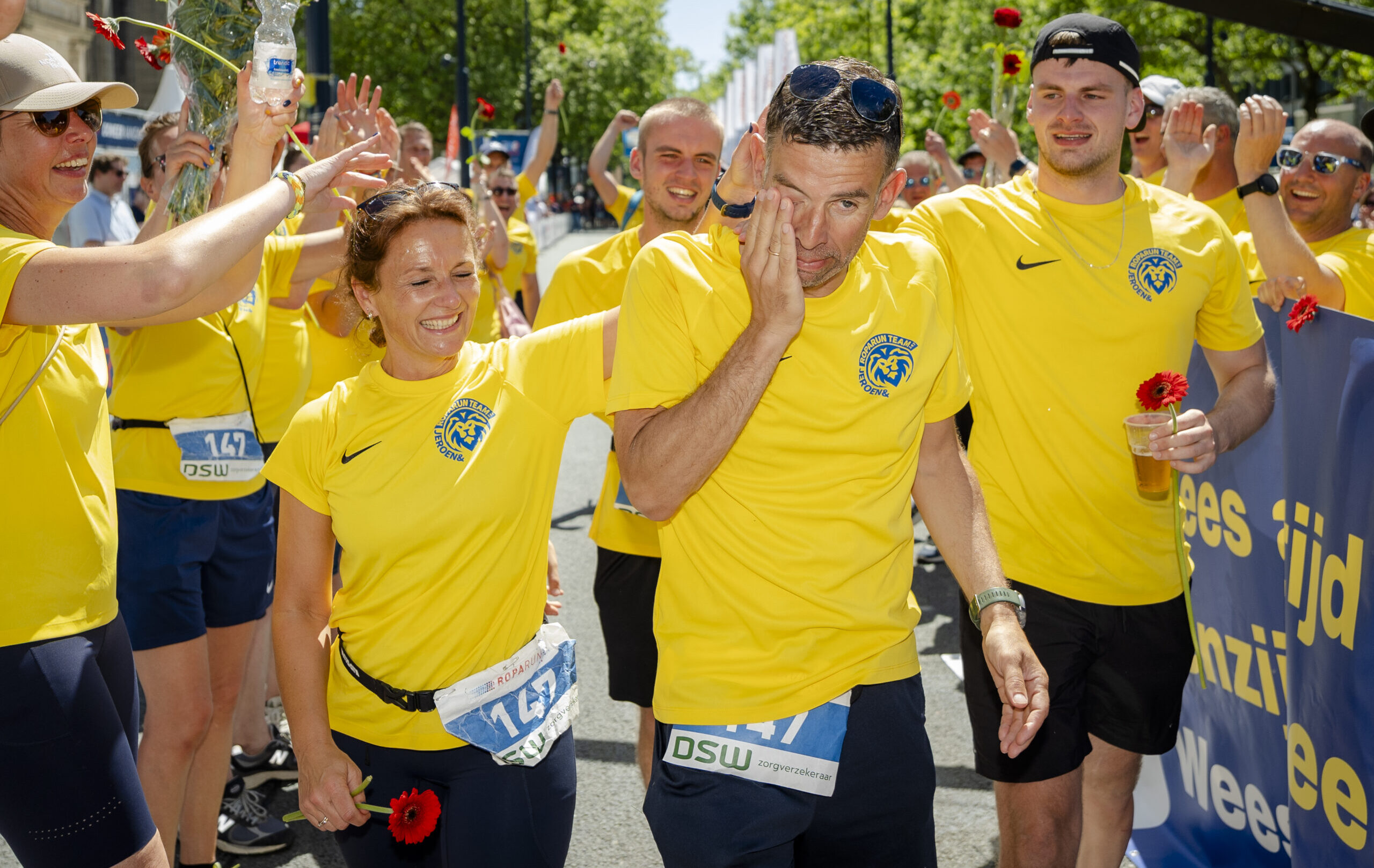
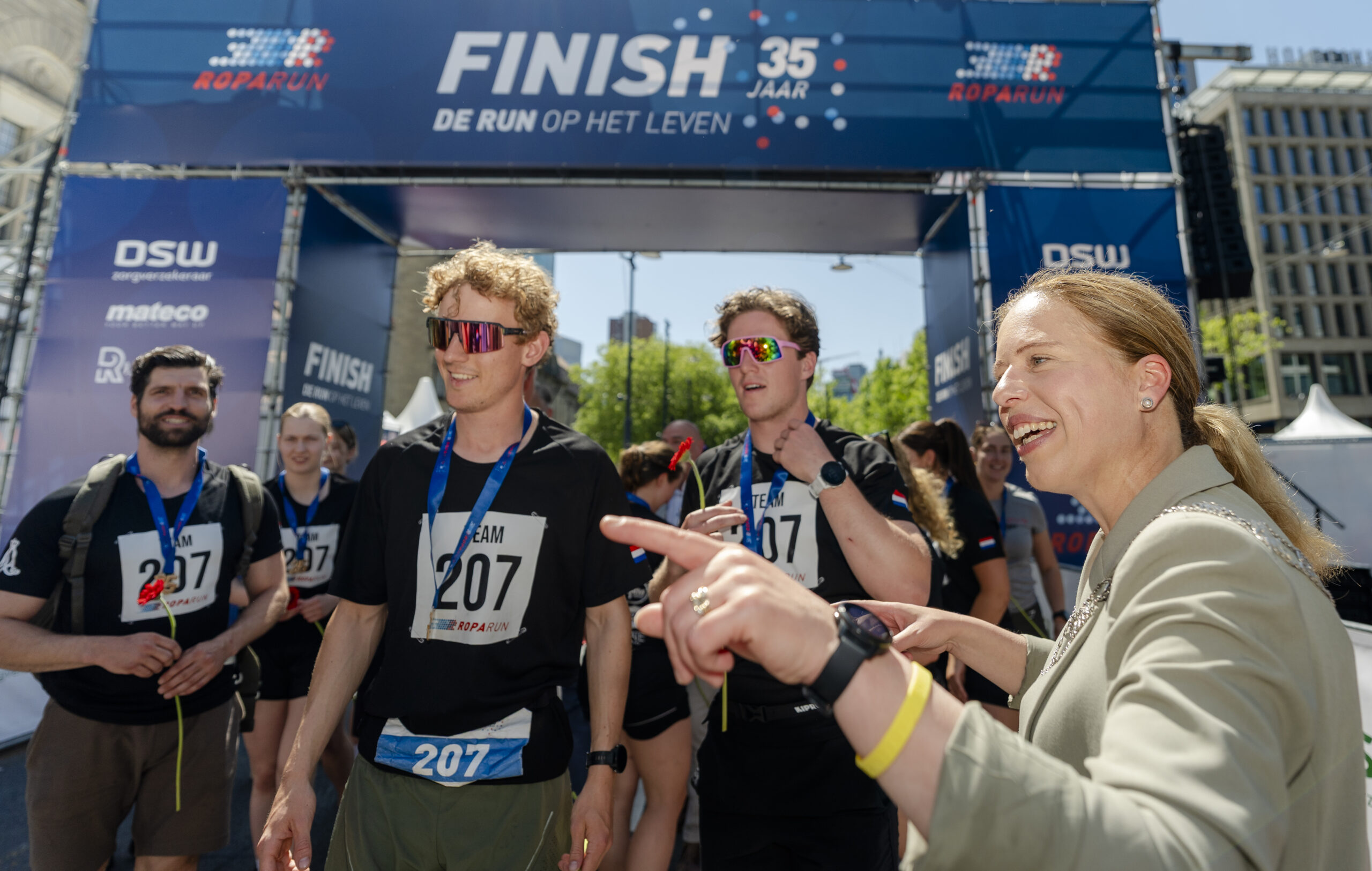
What began as a bet became a movement that shows exactly what Rotterdam is good at. The Roparun is not an event built on big words, but on action. On people rolling up their sleeves, taking responsibility and achieving something together that is bigger than themselves. In doing so, the Roparun has contributed to Rotterdam’s positive image for 35 years: a city that not only wants to move forward, but also looks out for others. A city of resilience, solidarity and determination. Precisely because thousands of participants, volunteers, supporters and charities connect themselves to the Roparun, Rotterdam becomes visible as a city where social commitment is not an empty promise, but something you can feel, see and experience. In this way, the Roparun puts Rotterdam on the map as a city with a big heart and a mentality that is recognised far beyond the city’s borders.
And all of that because of an old-boys’ bet at a lunch table in Rotterdam-Overschie.
Au revoir Paris. Un grand merci.
Because Peter, Thea and Sjaak already knew one thing for sure back then: the Roparun was here to stay.
Related brand partners

Media library for this story