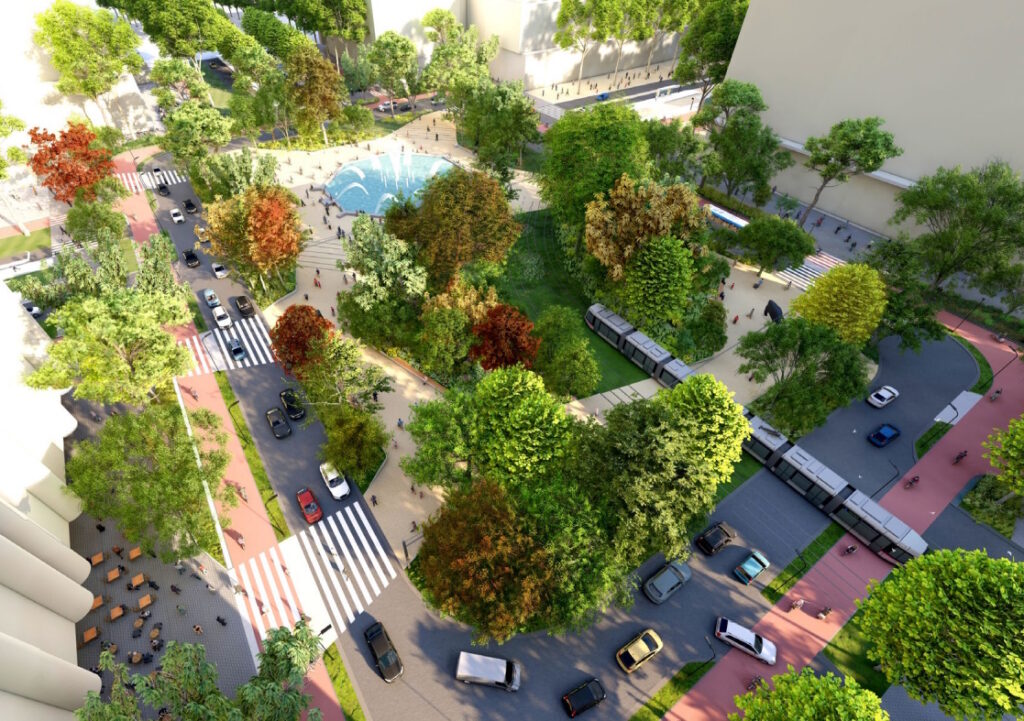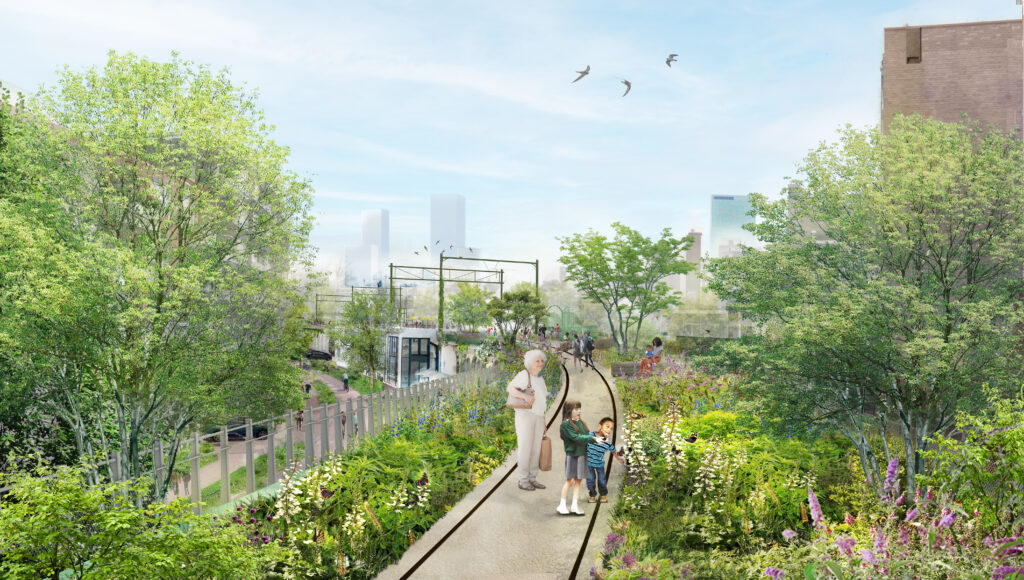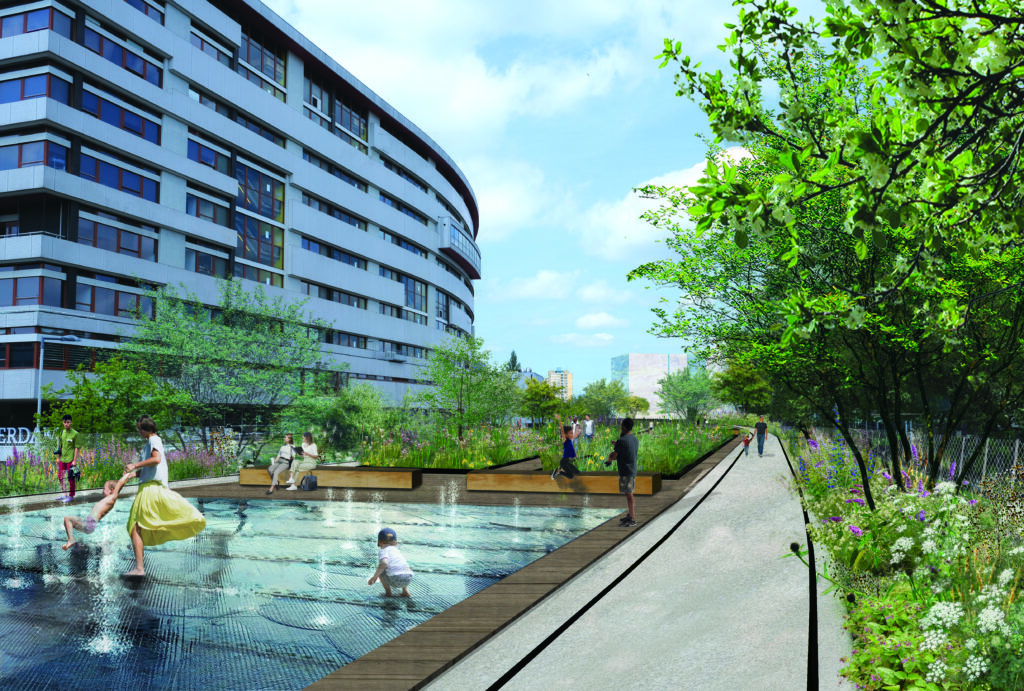
Het Park van Morgen 2.0 is het eerste park ter wereld met verlichting op energie van planten. Biotechdesigner Ermi van Oers wil Rotterdammers bewust maken dat ze onderdeel zijn van de natuur. ‘Door natuur, wetenschap en design te laten samensmelten wil ik mensen zich laten verwonderen over de natuur zodat ze denken: Dit is eigenlijk zoals het hoort.’
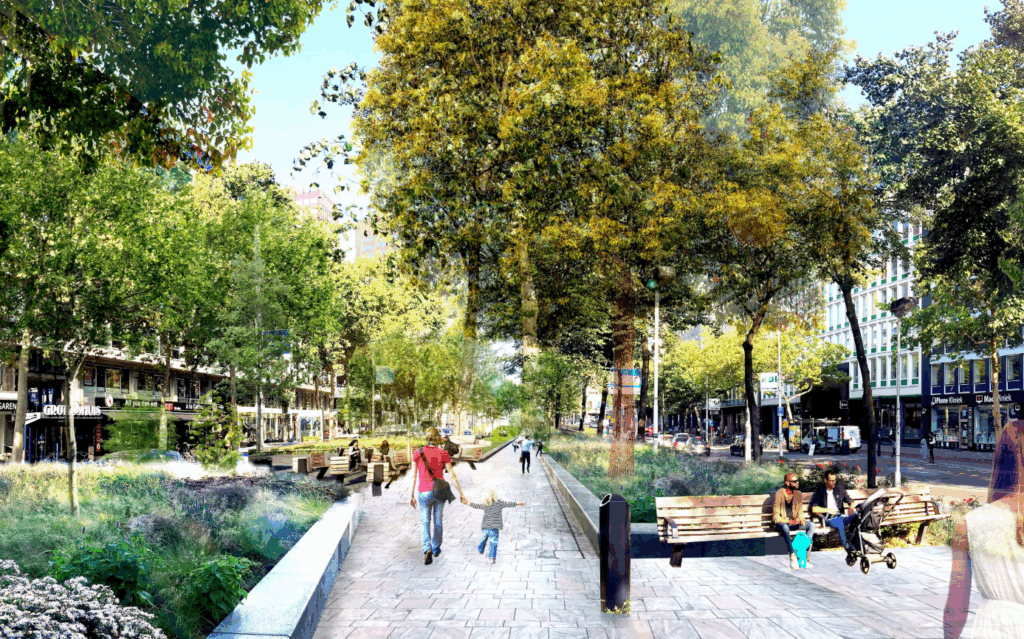
The Park of Tomorrow 2.0 is located in the Reyeroord neighbourhood in Rotterdam Zuid. Sparkling lights respond to the presence of people and illuminate the path. The plants in the park collectively generate the energy needed for this lighting. Here’s how it works: nutrients from plants partly end up in the soil as residual matter. Natural bacteria break down this residue, releasing electrically charged particles. A biological battery captures these particles and supplies energy to the lights.
Pioneering is in this city’s DNA.
Ermi van Oers calls this technique “living light.” She discovered it during her studies at the Willem de Kooning Academy in Rotterdam. “I chose that programme because I saw they were truly looking toward the future — both in their use of the latest technology and in their vision of how designers can build a sustainable career.” Living in Rotterdam wasn’t my first choice at the time, but after six months I was completely in love with the city. The directness, the openness, and the constant sense of movement and life — pioneering is in this city’s DNA.”
Breathing light
She graduated cum laude in 2016 with the Living Light Lamp. With the help of technicians and scientists, Ermi mastered the knowledge and techniques needed to make a lamp run on the energy generated by plants. No one had ever done it that way before. “You see a kind of breathing light — it gently fades in and out. Yet it still feels as if the lamp is continuously on. It requires only a very small amount of power, which the plant itself generates. That’s only possible if you program cleverly and design extremely energy-efficient electronics.”**
The idea was born in the M4H district.
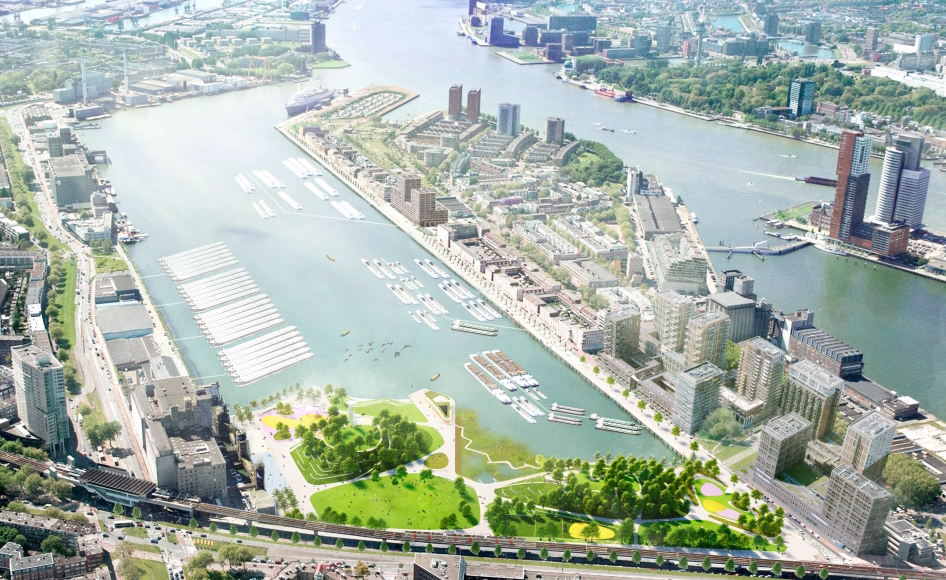
In this former port area, Ermi researched residual waste streams during her studies. “Take a bakery, for example — its biggest waste stream is heat. For an Islamic butcher, it’s blood. What do we do with that? In nature, every residual or waste stream becomes a source of nutrition for something else. That was my trigger. Humans are the only beings on this planet who don’t follow that principle. The question became: how can I, as a designer, turn that into something valuable?”**
Electricity from urine
A sewage company in the area caught Ermi’s attention the most. “Because it’s so closely connected to humans. You can imagine what their largest waste stream is. We explored all the possibilities. That’s how we discovered a technique that allows you to generate electricity from urine. Something so ‘dirty’ can suddenly become something valuable. It completely changes how we perceive waste streams.”
This discovery inspired Ermi to design the Living Light Lamp in collaboration with the biotech company Plant-e, and she used it as her graduation project. She went on to win three awards with it.
After graduating, Ermi founded the biodesign studio Nova Innova in the Keilewerf. More than eighty creative and innovative companies are based here, supporting and strengthening one another. Before long, the City of Rotterdam reached out to explore the possibilities of applying the Living Light Lamp on a larger scale in the city. The first version was installed in 2019, and with support from Citylab010, the ambitious Park of Tomorrow 2.0 became a reality.
“Rotterdam is truly the place I need to be,” Ermi says. “For me, it’s the city to innovate — because it has the courage to pioneer, to take risks, to make mistakes. Make it happen, indeed.”
I want to harness the intelligence of Mother Nature
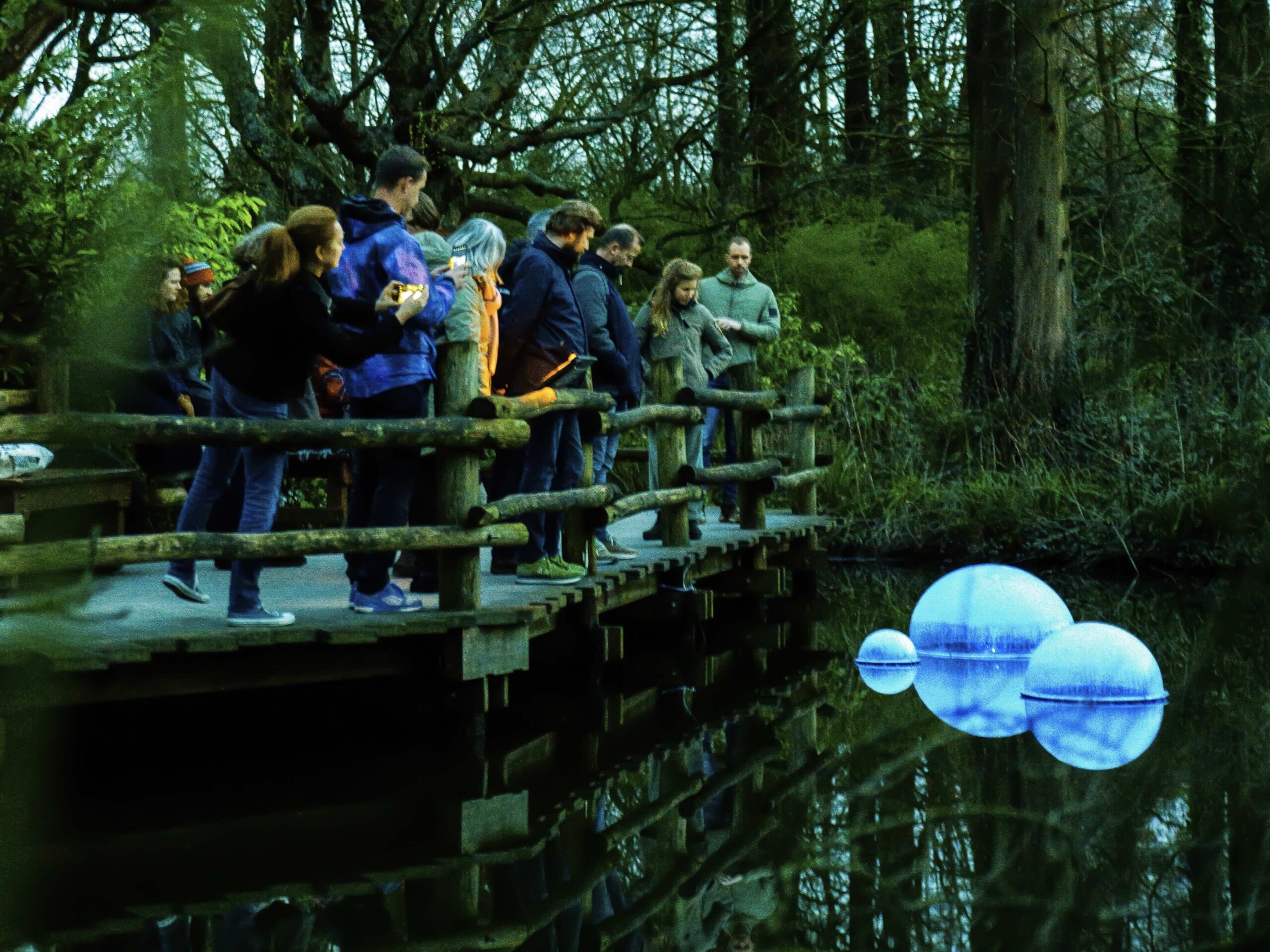
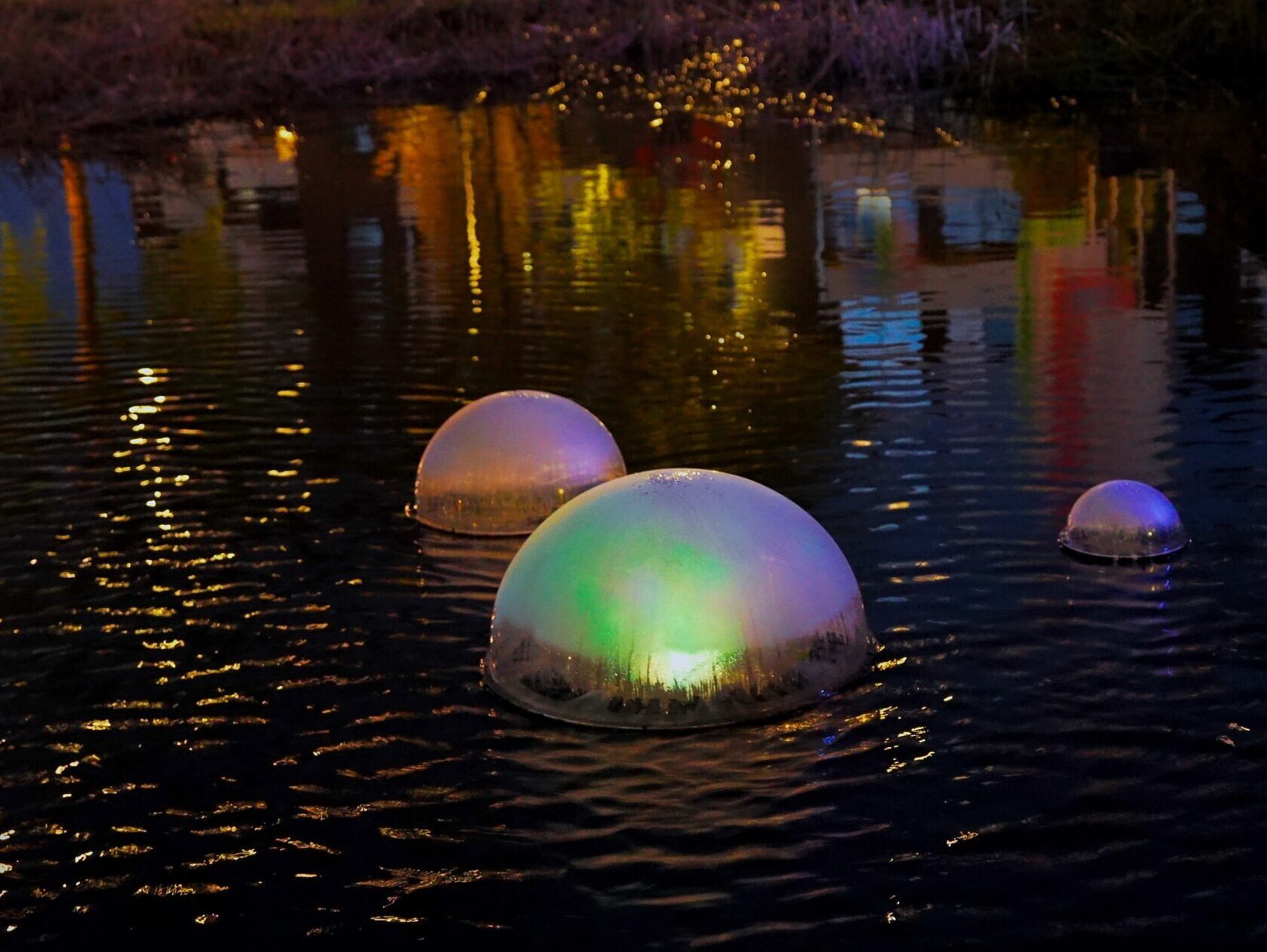
Ermi van Oers wins the Marketing Award Rotterdam Talent 2025 for positioning the city as a frontrunner in sustainable innovation. Together with her team, Ermi has developed another striking design: POND (Power of Nature-Based Design). “These are floating, glowing lenses that change colour depending on the health of the water. I want to give nature a voice in this way. Designing with nature means using the intelligence of Mother Nature. There is so much we can learn from her — and collaborate with.”
Nibbling bacteria
The pilot installation of POND is currently floating in the water of Diergaarde Blijdorp. The intention is for the glowing lenses to appear in other parts of the city soon as well. Rotterdams Weerwoord is funding the project. Once a location has been selected and the permit is approved, Rotterdam residents will be able to marvel at this natural light. “The water needs to contain enough organic material — something the bacteria can happily ‘nibble on’ to keep the light glowing. POND will also be installed in Utrecht and Amsterdam in early 2026.”**
There’s a chance Ermi may be away at that time, as it’s important for her to alternate the city with periods spent in nature. “Earlier this year, I spent two months in the Costa Rican jungle. That’s where I feel truly, deeply happy. But I also feel that I need to be here in Rotterdam to help restore the connection between people and nature. I want the people of Rotterdam to understand that they are part of nature — and that when they take good care of nature, nature will take good care of them in return. That’s how we’ll create a much healthier living environment, now and in the future.”
Foto credit ‘Nova Innova’
www.novainnova.com
Related brand partners
Media library for this story