Buy a piece of design or join a creative workshop at an waste collection facility, the place where everyone brings their discarded belongings and materials. With Milieupark + De HER, Rotterdam brings circularity closer to its residents. Manager Marc ten Oever prefers to call it passing on, passing on objects, and the stories behind them. Because in the end, it all comes down to awareness. ‘Look, the transition starts with yourself, and here, as a municipality, we’re showing how that works.’
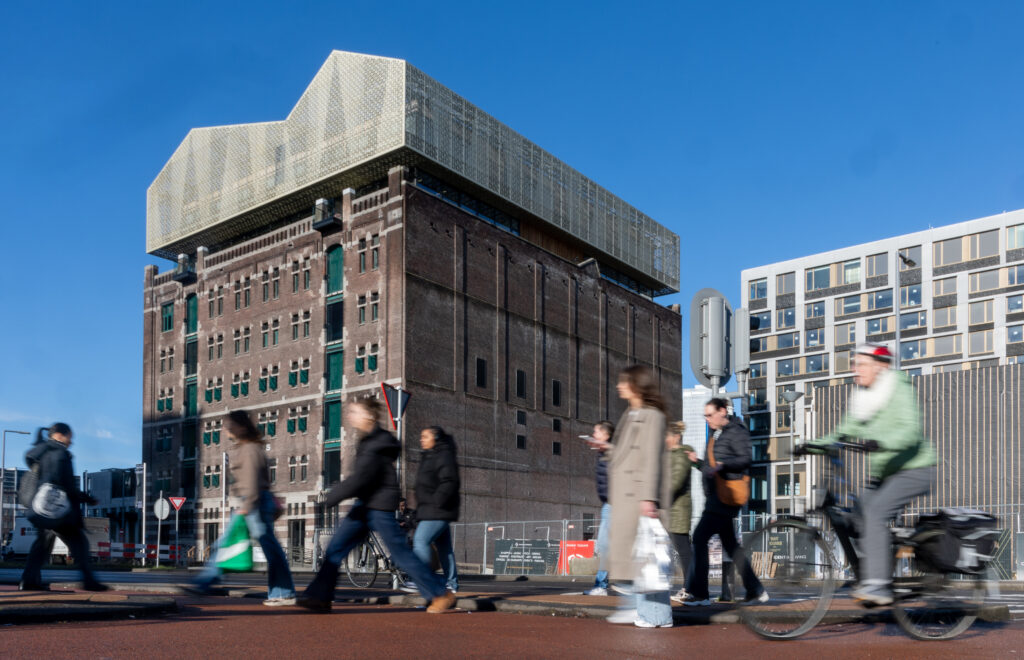
Drive up to the waste collection facility on the Bovendijk in Rotterdam-Noord and you’ll spot the striking building of De HER, standing there since 2025. Around sixteen creative entrepreneurs work here, turning discarded materials into new products, running workshops, and organising educational projects. Milieupark + De HER is a place where you can see, learn, and experience what circularity really means. And that’s badly needed: Rotterdam aims to be waste-free by 2050.
The hand-down hub
After 400 guided tours, Marc ten Oever is still just as enthusiastic about everything that makes De HER special. Rotterdammers bring their belongings and materials to the environmental park’s hand-down hub, where everything gets checked for a possible second life. That’s how your old scrap wood might end up reborn as a piece of furniture at De HER, or your old artificial flowers might find their way into a repurposed vase from Power Flower Stories.
Sit here for a while and you start to notice the sheer abundance of things and materials, everything that gets thrown away.
Nearly all twenty workspaces for entrepreneurs at De HER are occupied. Each one uses materials from the Milieupark to a different degree, anywhere from five to a hundred percent. There’s a sewing course using leftover fabric scraps, circular lamps being made, and one entrepreneur refurbishing bicycle batteries. Marc sees the possibilities waste offers every single day. ‘Sit here for a while and you start to notice the sheer abundance of things and materials, everything that gets thrown away. Because it’s considered worthless. And yet we think nothing of passing baby clothes on from one family to the next.’
Artificial flowers
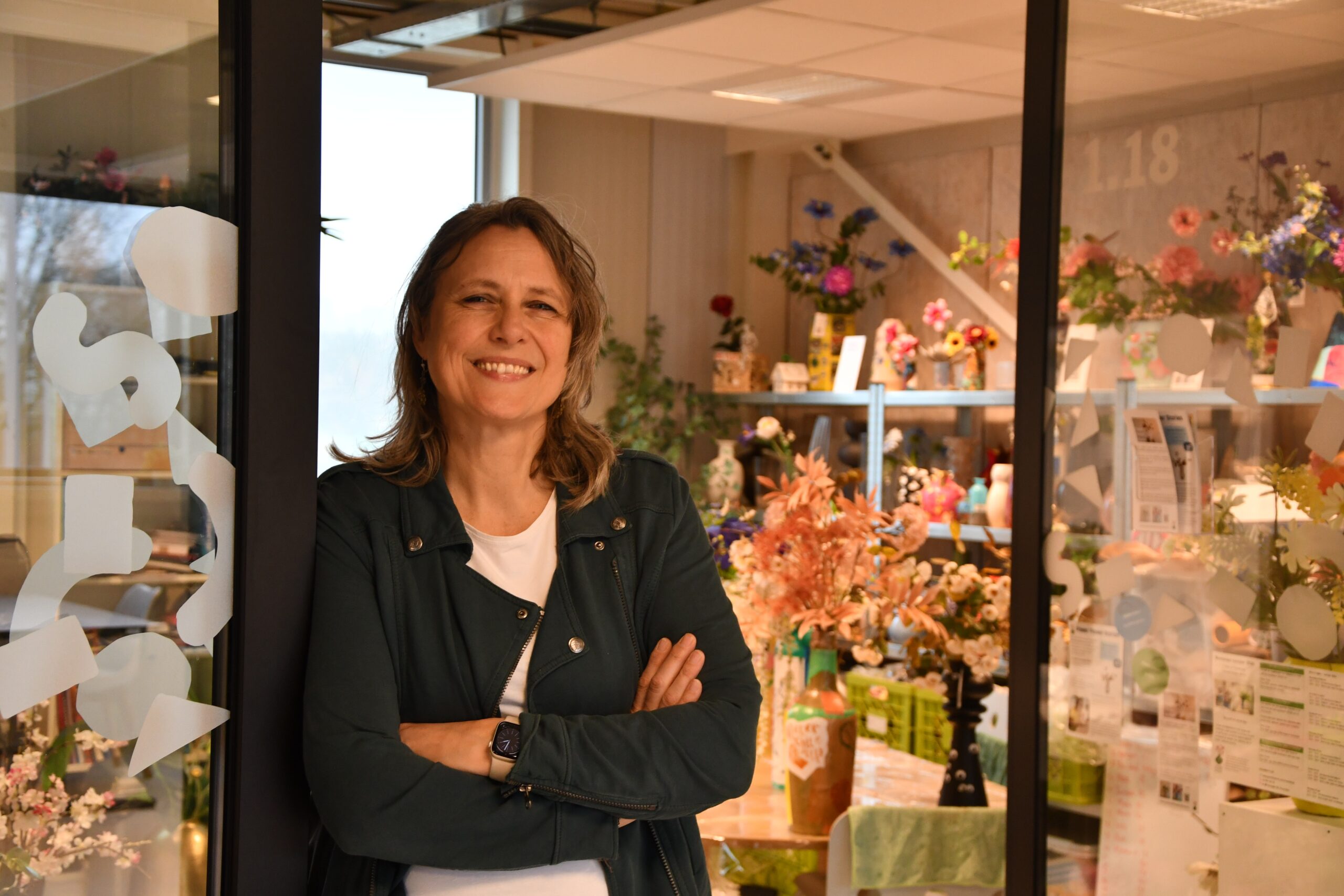
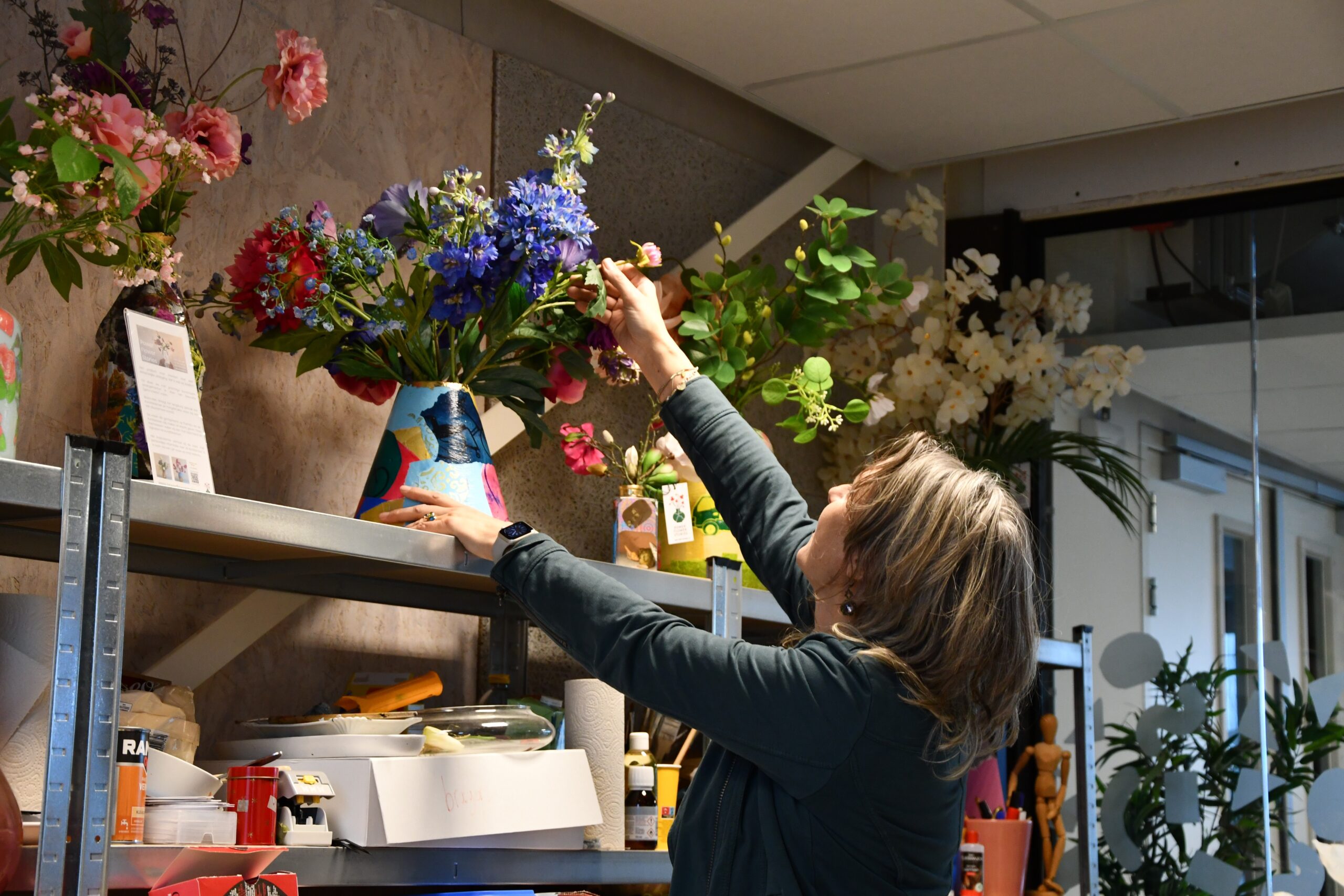
In its first six months, 4,800 visitors came to De HER to see the circular economy at work. At Power Flower Stories, repurposed vases are crafted by people with physical disabilities. Olga Teule then rents out these vases with their own story, paired with artificial flower arrangements. Along the way, she made quite the discovery. ‘When we got here, it turned out there weren’t just loads of vases lying around, but loads of artificial flowers too. Honestly, kind of bizarre. But still beautiful, in good enough shape that you think: I can do something with that.’
The idea of reusing something and seeing if you can make it even better than it was before — I think that’s truly wonderful.
Olga set up shop at De HER because the concept appealed to her, and she discovered it to be a genuinely inspiring place. ‘It’s a really lovely spot that draws a lot of visitors, and the entrepreneurs here help each other out too.’ Working circularly matters deeply to her. After a vase has been rented out to a number of businesses, it returns to its maker after three years. ‘I think the idea of reusing something and seeing if you can make it even better than it was before, I think that’s truly wonderful.’
A former laboratory
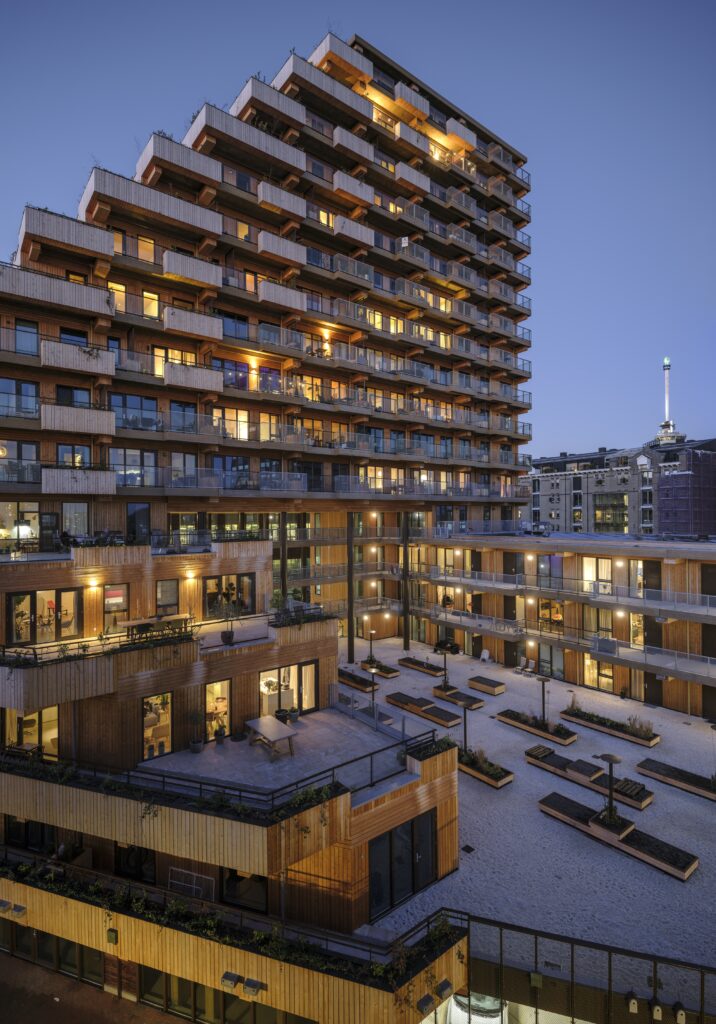
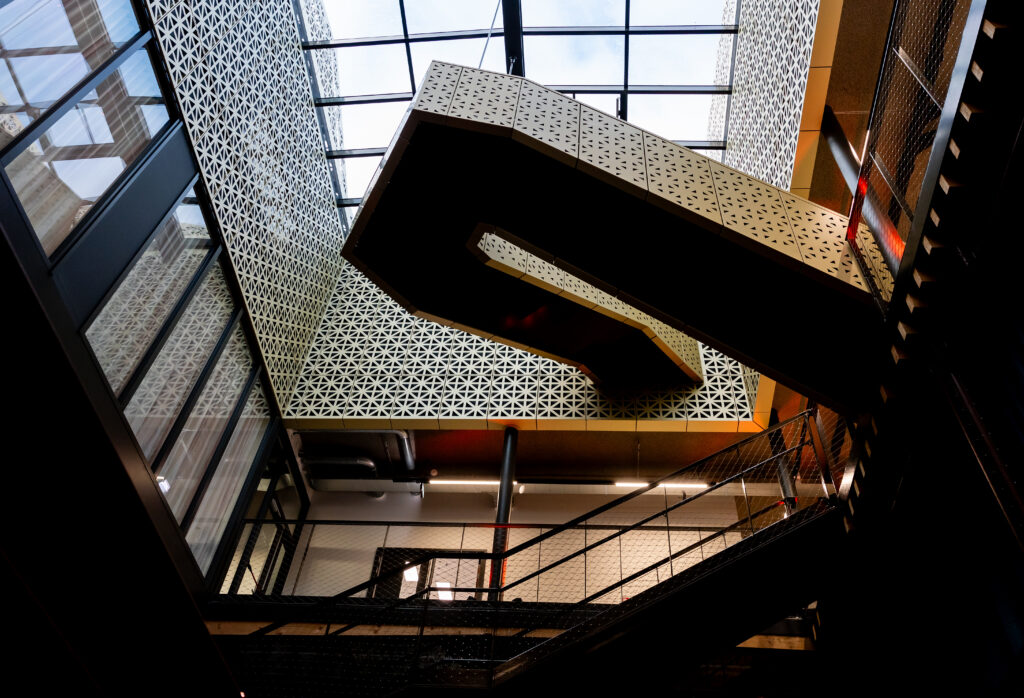
De HER is built to be 85% circular. A former laboratory building in Delft was completely dismantled and rebuilt next to the waste collection facility on the Bovenweg in Schiebroek. Only the lift, the foundation, and the electrical wiring are new. What stands out about the building are its ten units, used as studio and office spaces, made in part from bottles and washing machine parts. In 2025, Milieupark + De HER won the public choice award at the Rotterdam Architecture Prize for it.
Marc is proud that the City of Rotterdam built a circular structure like this for the first time. ‘The suspended ceilings, the wall cladding, it’s all recycled material. Cabinets, chairs, tables: everything has been reused. That’s how we show it can genuinely be done.’
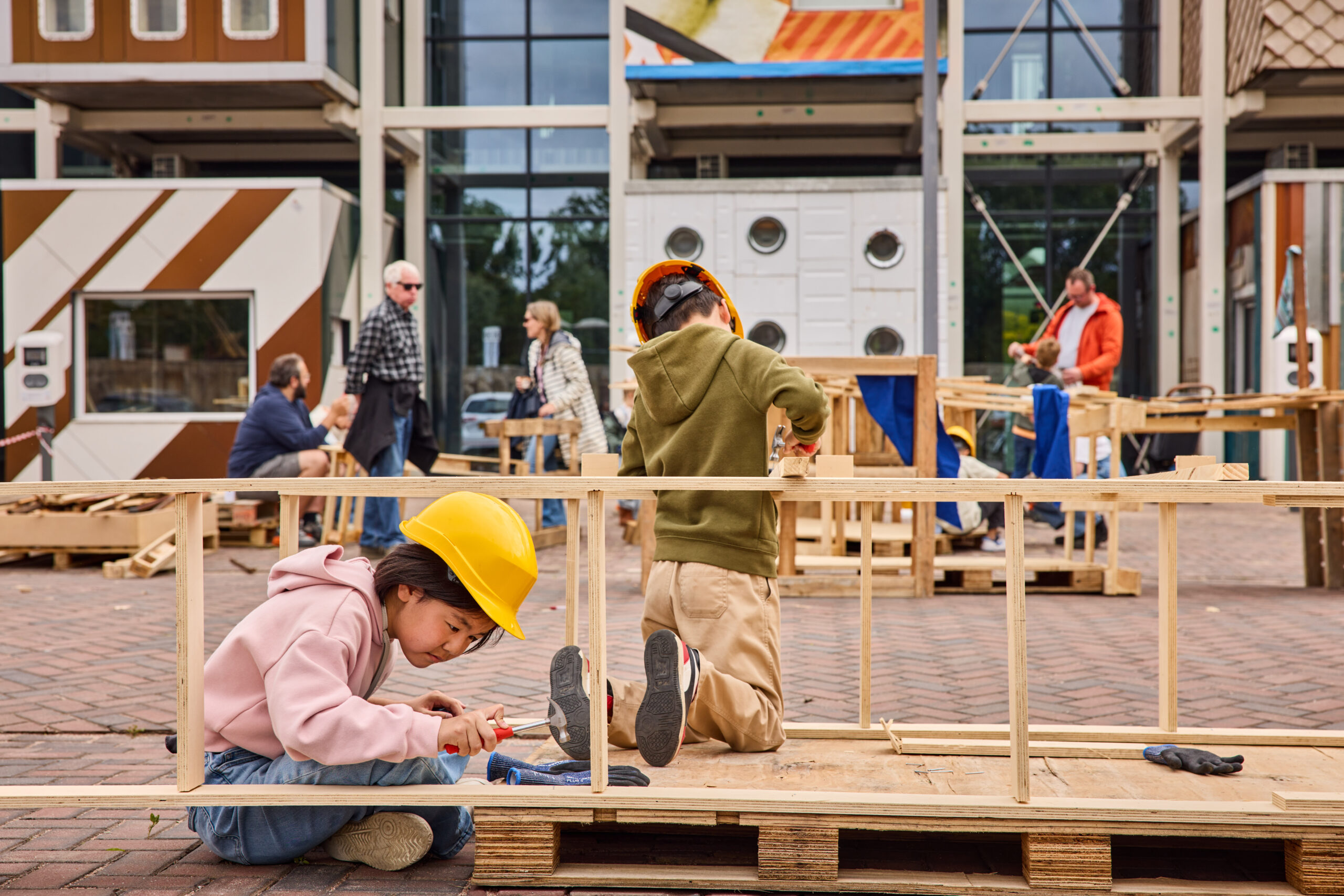
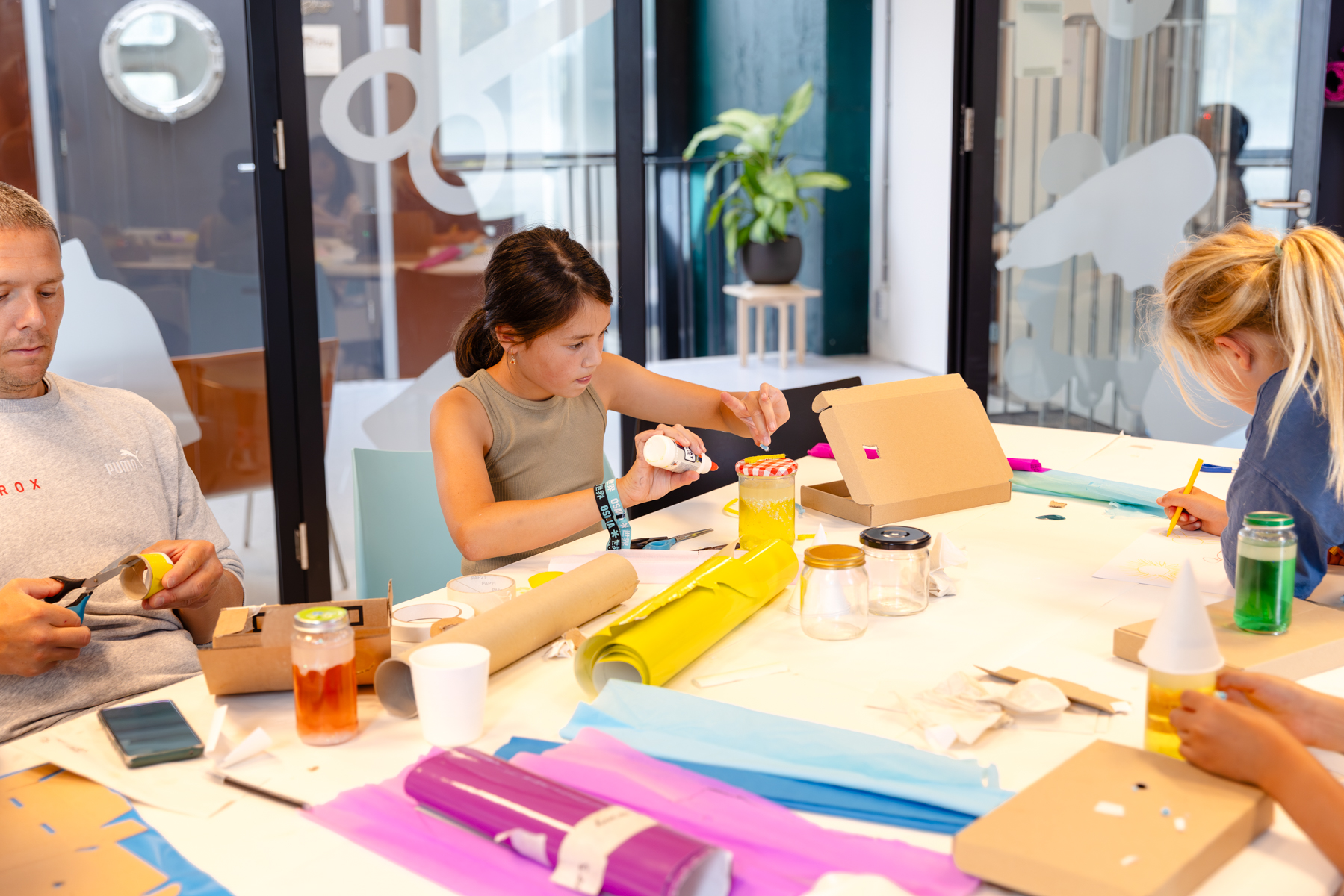
We let children work as the designers of the future.
Sustainability
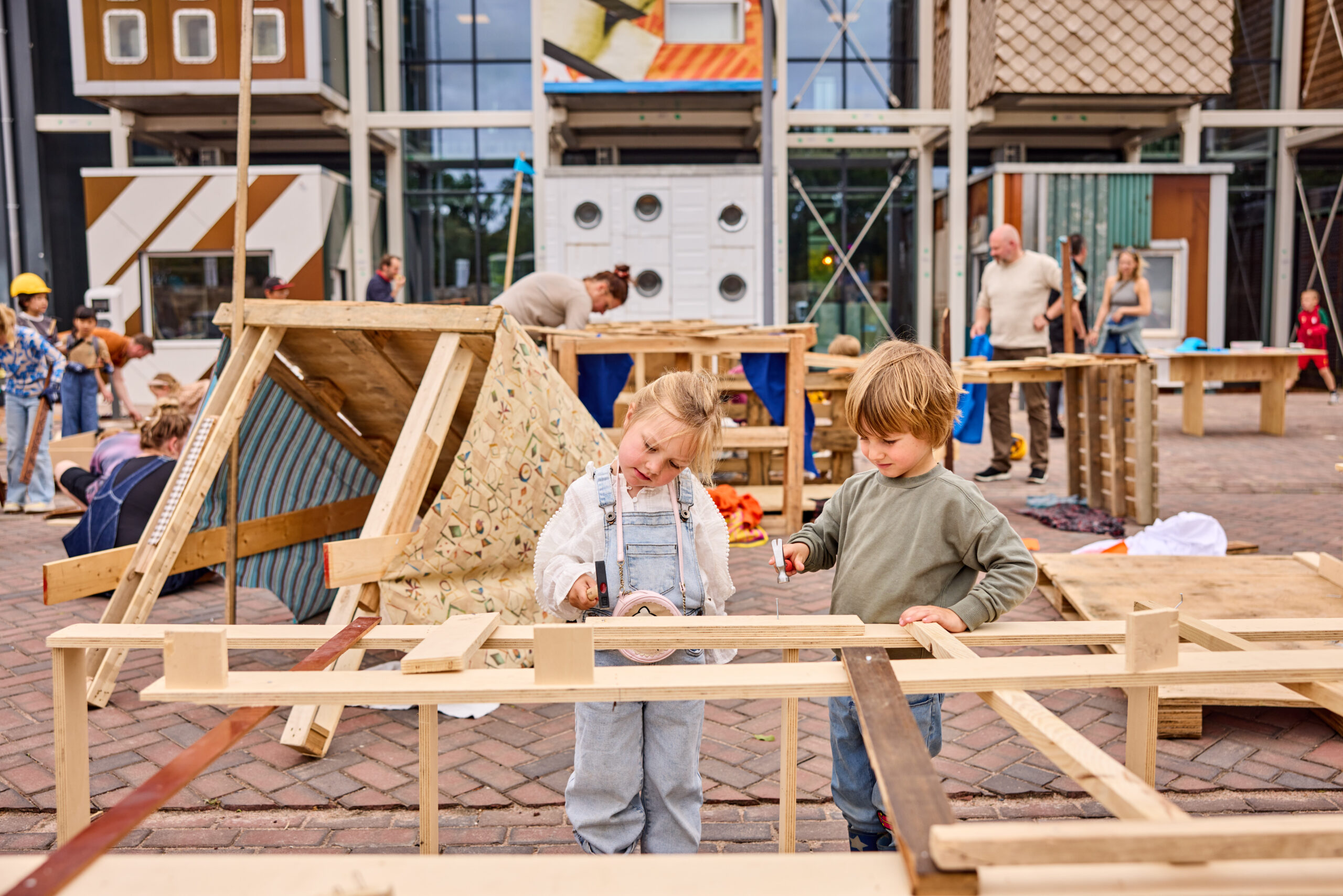
Lieke van den Berge was one of the first entrepreneurs at De HER. With her company Kite Educatie, she develops educational programmes around art, technology, and sustainability. ‘We let children work as the designers of the future. So they think through social issues, and sustainability is always one of the standard themes. It’s a fixed part of every lesson. That way, children themselves get to shape the world they want to live in.’
Hout
For Lieke, De HER is the perfect home for her business. ‘We collaborate a lot with makers and designers, and they’re all gathered right here. On top of that, the Milieupark supplies us with cardboard and packaging materials. Children use all kinds of waste material during lessons and workshops where they design something new themselves. And for our programmes for museums and cultural institutions, we need a lot of wood. We source that from the waste too.’
Lieke is enthusiastic about the concept behind De HER. ‘Mainly because it genuinely involves the public. It changes how you look at the material you throw away. That it’s actually a raw material for someone else. I find that really powerful. But also the building itself, of course, completely recycled. It shows that as a municipality, you take it seriously — how the world, or society, needs to change.’
We want to show that circular isn’t some utopian idea, but something within everyone’s reach.
Awareness
With a maker’s lab and talks, De HER draws a broad audience. A café is still on the wish list. For Marc ten Oever, awareness is the key driving force behind making it all a success. ‘We want to show that circular isn’t some utopian idea, but something within everyone’s reach. With the workshops, you get hands-on with materials yourself and experience that it’s possible. That it’s not just something you read about, but something you actually go and do.’
Marc likes to see De HER as part of something bigger, a movement to pass on far more belongings across the city. ‘I always say, if Amazon can do it, why can’t we? We’re at the forefront of logistics. So that red sofa handed in on the south side ends up with a happy new owner on the north side. That would be the ideal: things flowing through the city. That’s my dream, that’s the picture I have in mind.’
Click here for more information about De HER or to book a guided tour.
Related brand partners
Media library for this story