
How do you make solar panels that last longer and generate less waste? For Zola Fung-A-Jou of Rotterdam-based Biosphere Solar, it comes down to perseverance and hard work. ‘We want to change the industry standard so that every solar panel can be taken apart, repaired, and have its components reused.’
Our solar panel lasts much longer. And at the end of its life, you can take everything out and use it again.
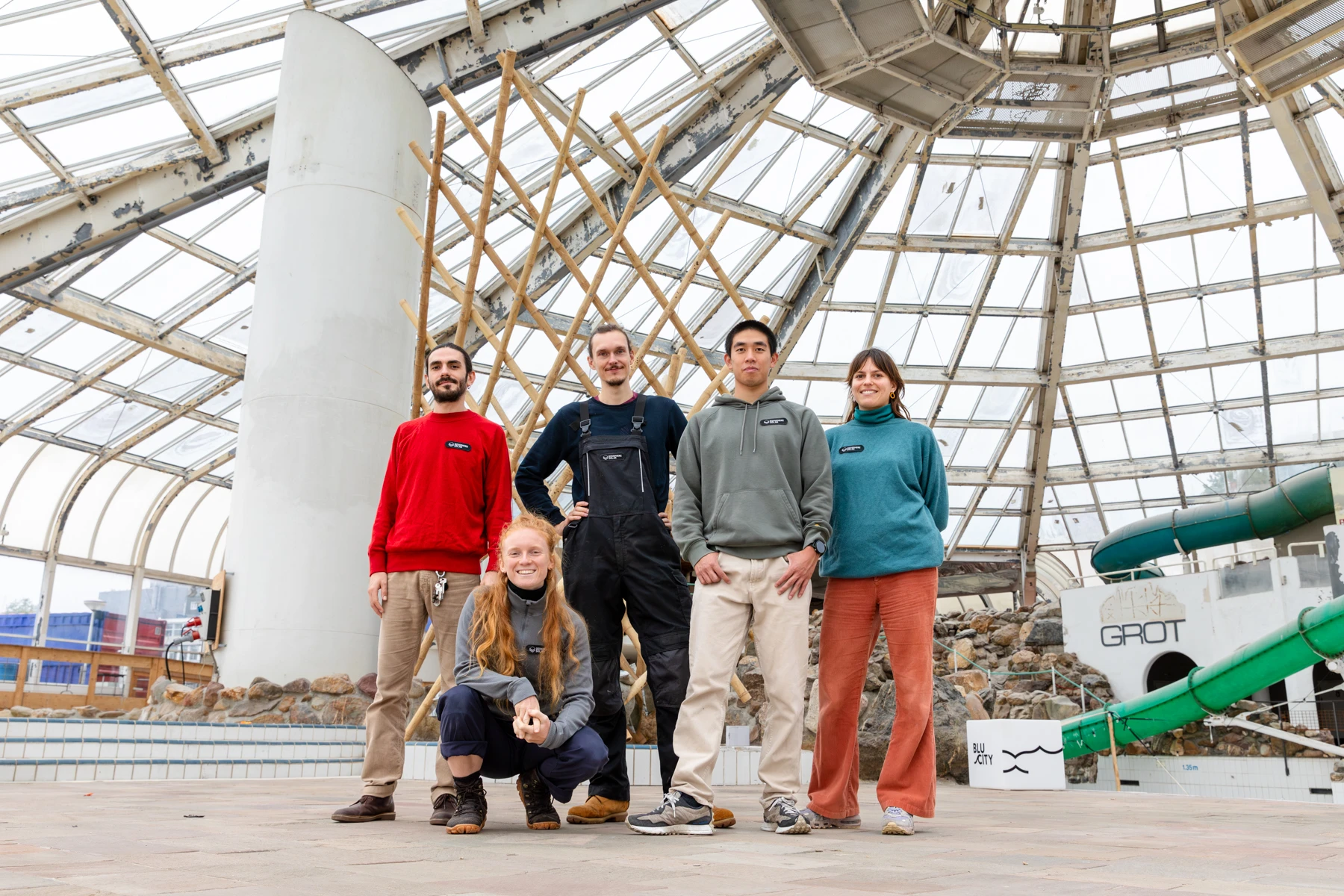
Deep in the basement of Blue City, the former Tropicana swimming paradise, Zola walks into the workshop of Biosphere Solar. Three colleagues sit focused at their laptops; the rest of the space is filled with solar panels or parts of them. A heavy ball hangs from a wall frame, used to test the strength of panels. This is where work on a circular solar panel for sustainable solar energy is happening.
Rubber edge seal
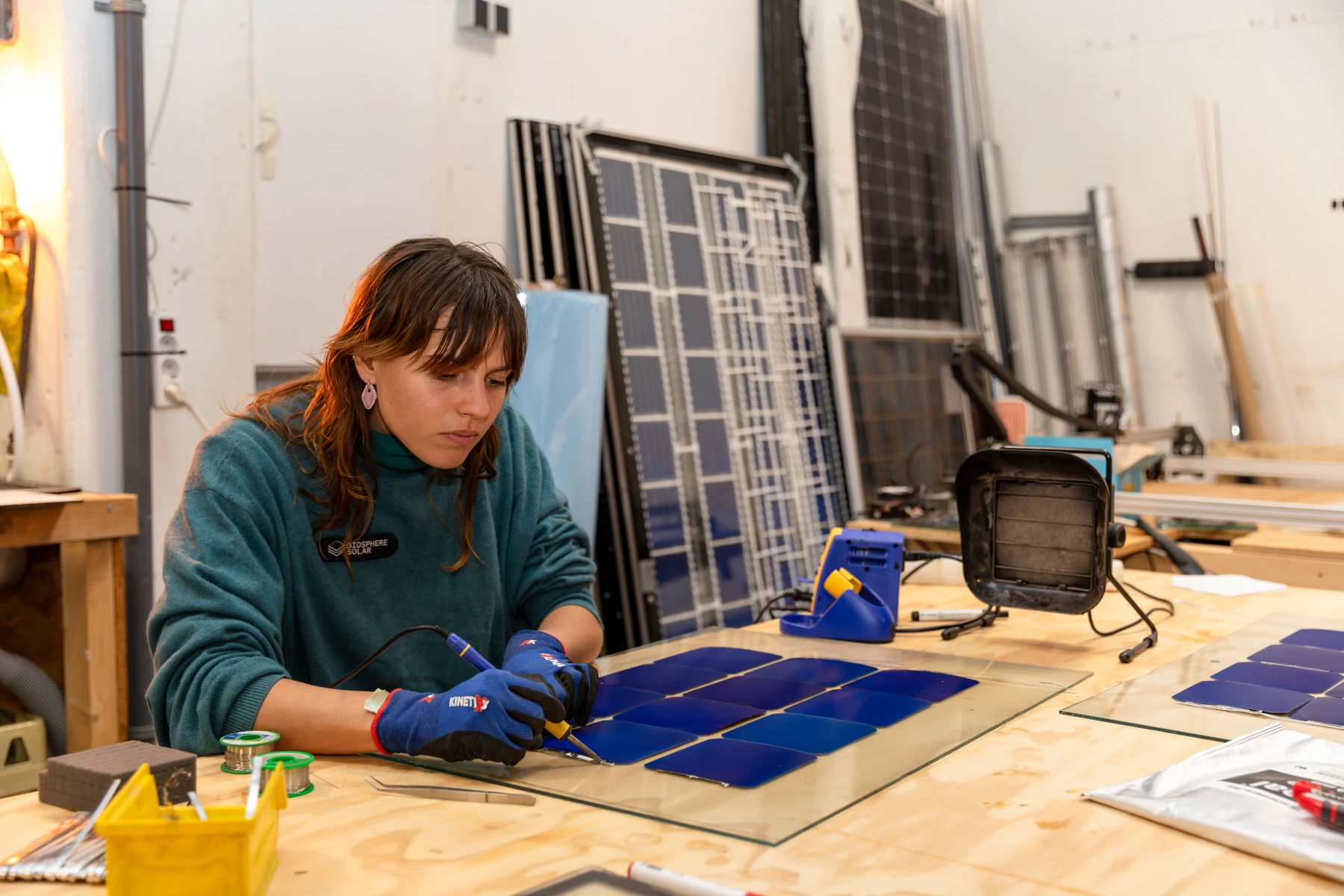
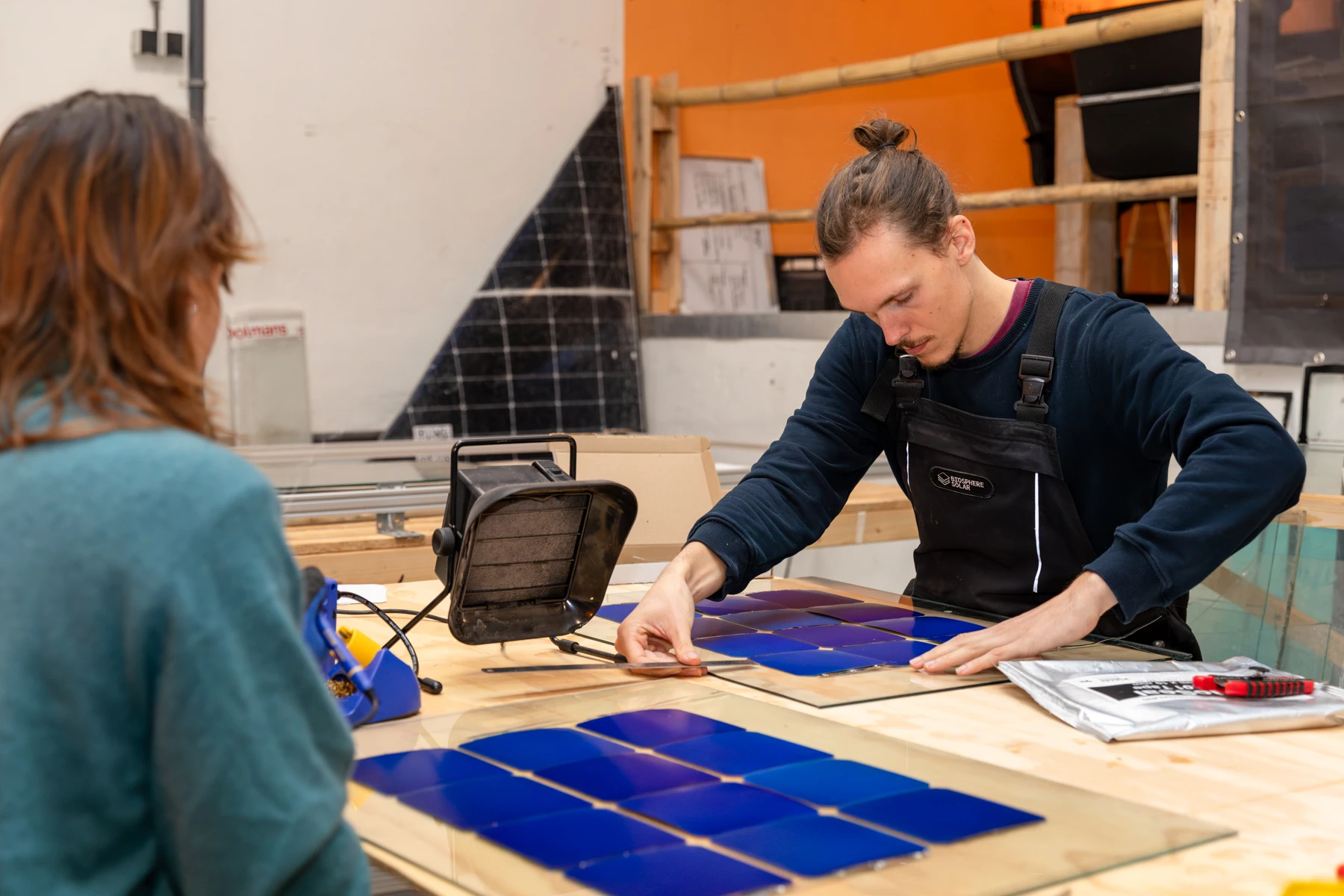
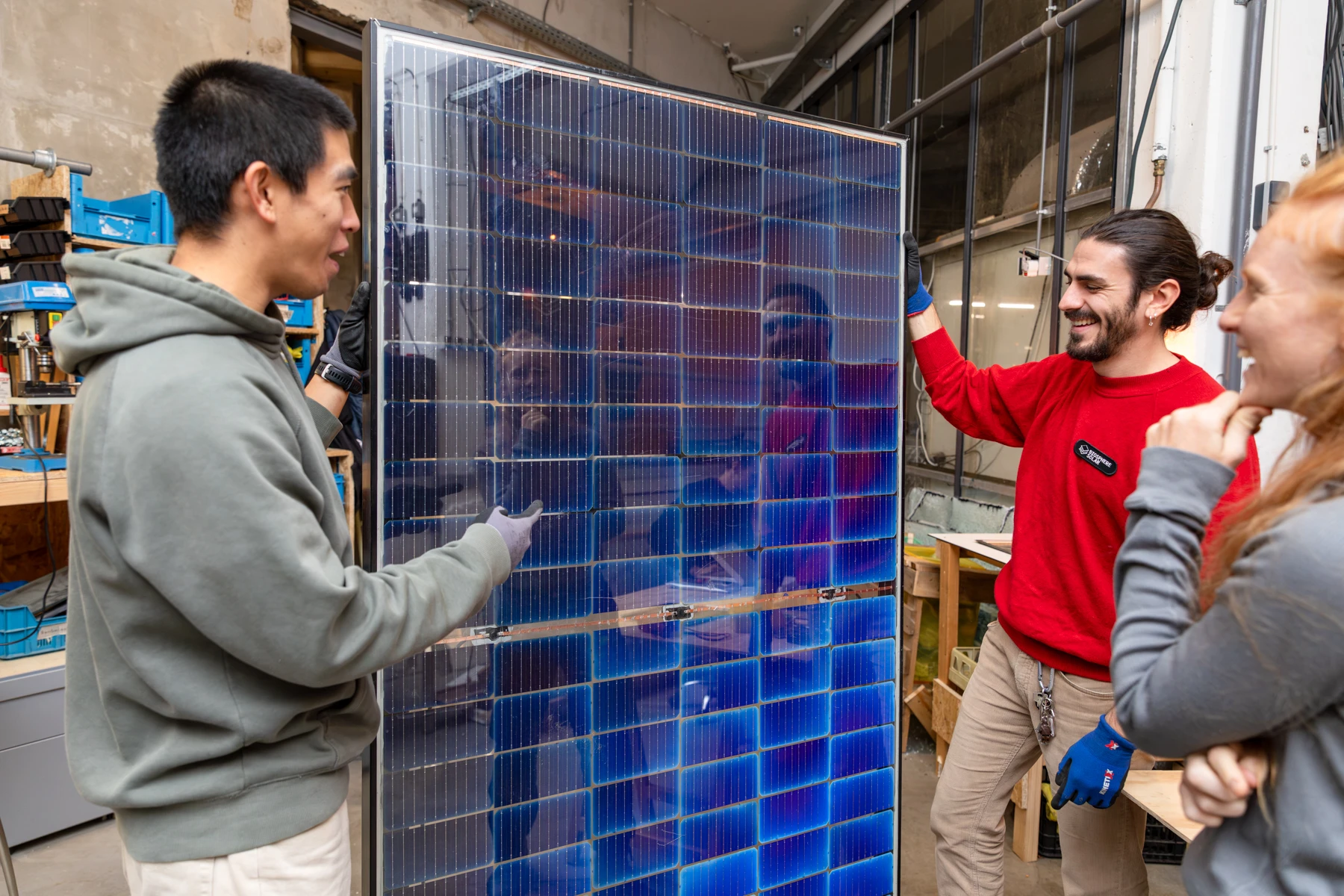
According to product engineer Zola, the problem with conventional solar panels is that everything is glued together, making repair impossible. ‘Our solar panels consist of two glass plates with a rubber edge seal, just like double glazing. If one cell breaks, or new cells come onto the market, you simply cut along the edges, flip the panel open, and replace the components. Our solar panel lasts much longer as a result. And at the end of its life, you can take everything out and use it again.’
Processed into asphalt
Solar panels currently last twenty to thirty years. In the worst case, they are then shredded and processed into asphalt, where toxic materials such as lead can end up in the soil. Biosphere Solar now produces three circular solar panels that can be repaired and reused. There is one limitation: they are not made from recycled materials, as this is not feasible at scale for solar cells, the most valuable component of the panel.
For Zola, it goes beyond technology. ‘It’s also about how you engage with the world and what you can contribute,’ she explains. She sees the energy transition as the perfect moment to rebuild an entire industry from scratch, more fairly this time. ‘I don’t just want to go along with producing more and more. I want to look at what actually needs to be made.’
I don’t just want to go along with producing more and more. I want to look at what actually needs to be made.
Figuring out together how to do it differently
In 2024, start-up Biosphere Solar moved from Delft to Blue City, Rotterdam’s hub for sustainable and circular entrepreneurs. Since 2015, this former swimming pool has been home to people working on sustainable innovation, from seaweed-based cosmetics to plant-based döner kebab. It’s a place built around one idea: figuring out together how to do things differently.
Biosphere Solar received a grant from the City of Rotterdam and won the Talent Award Rotterdam in 2025 for their boldness, vision, and exceptional perseverance. Their circular solar panel also fits neatly into Rotterdam’s ambition to be waste-free by 2050.
A just-do-it mentality
For Zola, Rotterdam is exactly the right city for Biosphere Solar. ‘It’s a city where a lot is possible. If you want to try something, you just go ahead and try it.’ That mentality, of getting on with it, is something she recognises every day in Blue City. ‘You feel a kind of energy from people who want to make something happen, who aren’t afraid to try things out.’
The experience and support of fellow entrepreneurs means a great deal to her, because pioneering isn’t always easy. ‘Sometimes I feel a bit disheartened, because we’ve known what the big problems are for so long, and yet so many people stay passive. But here you notice: let’s try to tackle it, even if it feels big and what you can do feels small. You just do it.’
Let’s try to tackle it, even if it feels big and what you can do feels small. You just do it.
Changing the industry standard
Biosphere Solar is a team of eight, working internationally. Four of them are based in Rotterdam, the rest in China, Germany, and France. Their goal is not to become a global solar panel manufacturer. It’s to change the industry standard, so that every solar panel produced in the future is repairable and circular. To get there, the company works with researchers, businesses, and governments. Biosphere Solar also works largely open source, keeping their technology publicly accessible. ‘We genuinely believe that technology develops much faster when you don’t keep it to yourself,’ Zola explains.
Climate chamber
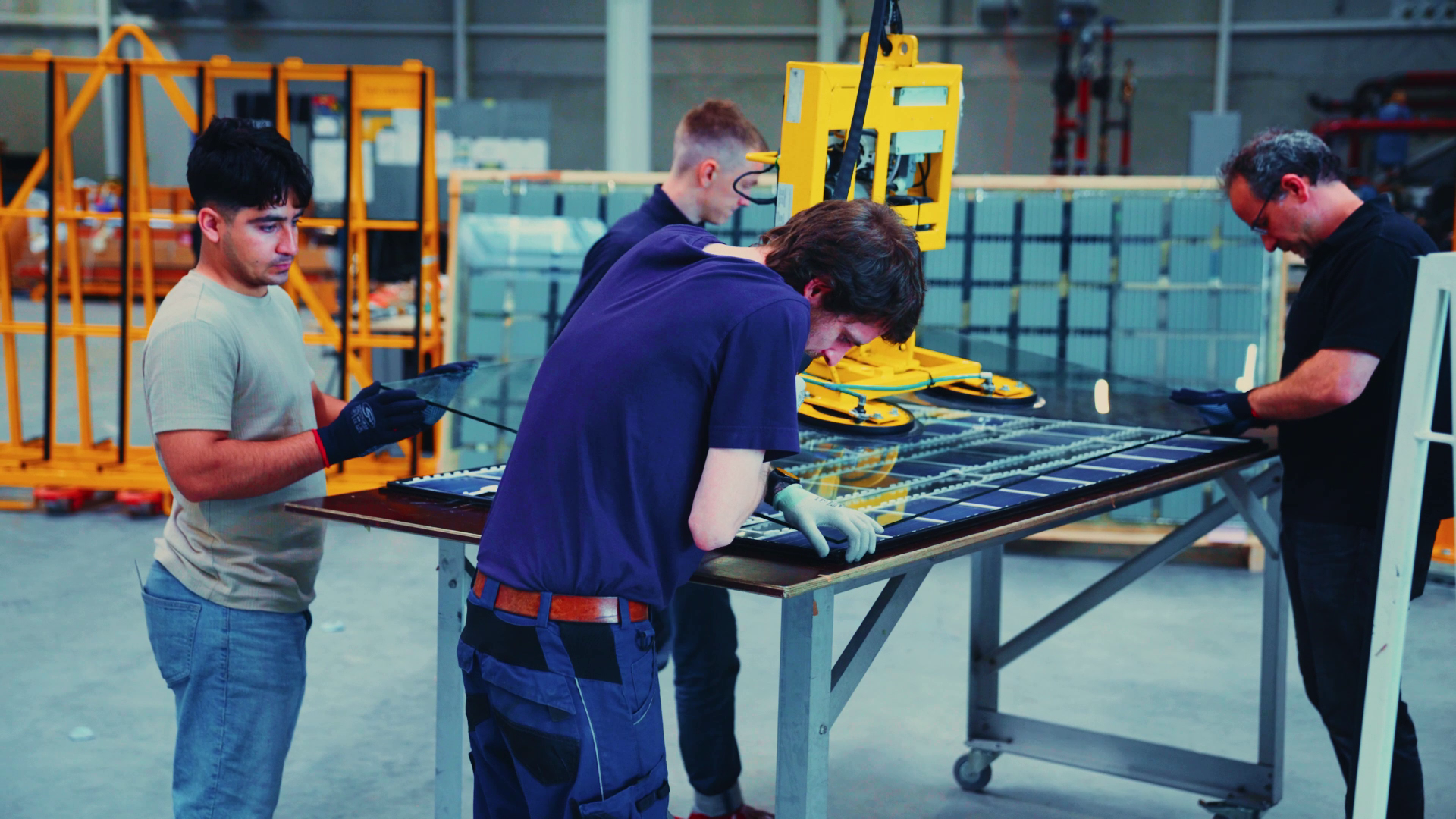
Development at Biosphere Solar shows no sign of slowing down. Probably still in 2026, they will move to the former Hunter Douglas building on the other side of the Maas. There, the company will have room for heavier testing equipment, including a climate chamber that can simulate ten years of solar panel ageing in just a few days. Their office will remain in Blue City, continuing to work from there on sustainable solar energy with circular panels the industry simply can’t ignore.
Related brand partners


Media library for this story