You see them every day on the city’s streets: 97 electric buses from RET and 38 emission-free bin lorries. And there are many more to come. Rotterdam’s air needs to get cleaner, fast, and the City of Rotterdam and public transport operator RET are working at pace to make it happen.
Rotterdam is the first city in the Netherlands with an exclusively electric car-sharing fleet.
Electric bin lorries
The city council wants Rotterdam to have halved its CO₂ emissions compared to 1990 by 2030. Because clean air matters for the health of the people who live here. An ambitious target, being tackled in close collaboration with dozens of Rotterdam organisations and businesses.
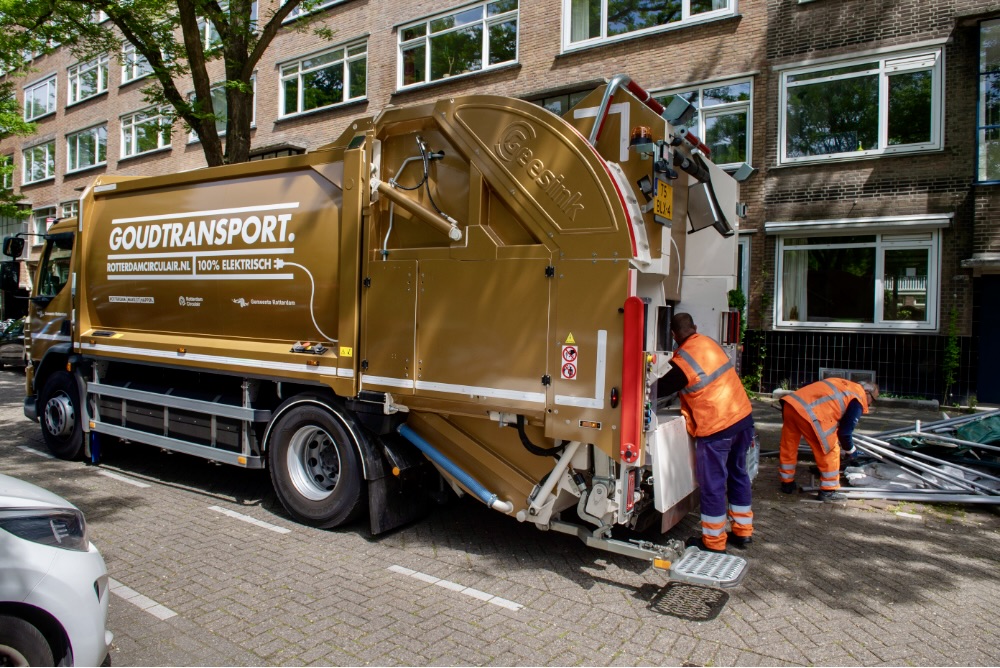
With 38 electric bin lorries, the municipality is leading by example. The vehicles have enough battery capacity to collect household waste during the day and recharge overnight. Dedicated charging plazas have been set up at municipal depots for exactly that purpose.
The municipal fleet
All vehicles owned by the City of Rotterdam must be emission-free by 2030. For the passenger cars in the municipal fleet, that goal has already been met: all of them are electric, with just one hybrid exception. Of the lighter commercial vehicles, such as vans, 67 percent are now emission-free. And with the arrival of fifty emission-free lorries, the electrification of heavier vehicles is well underway.
Electric buses
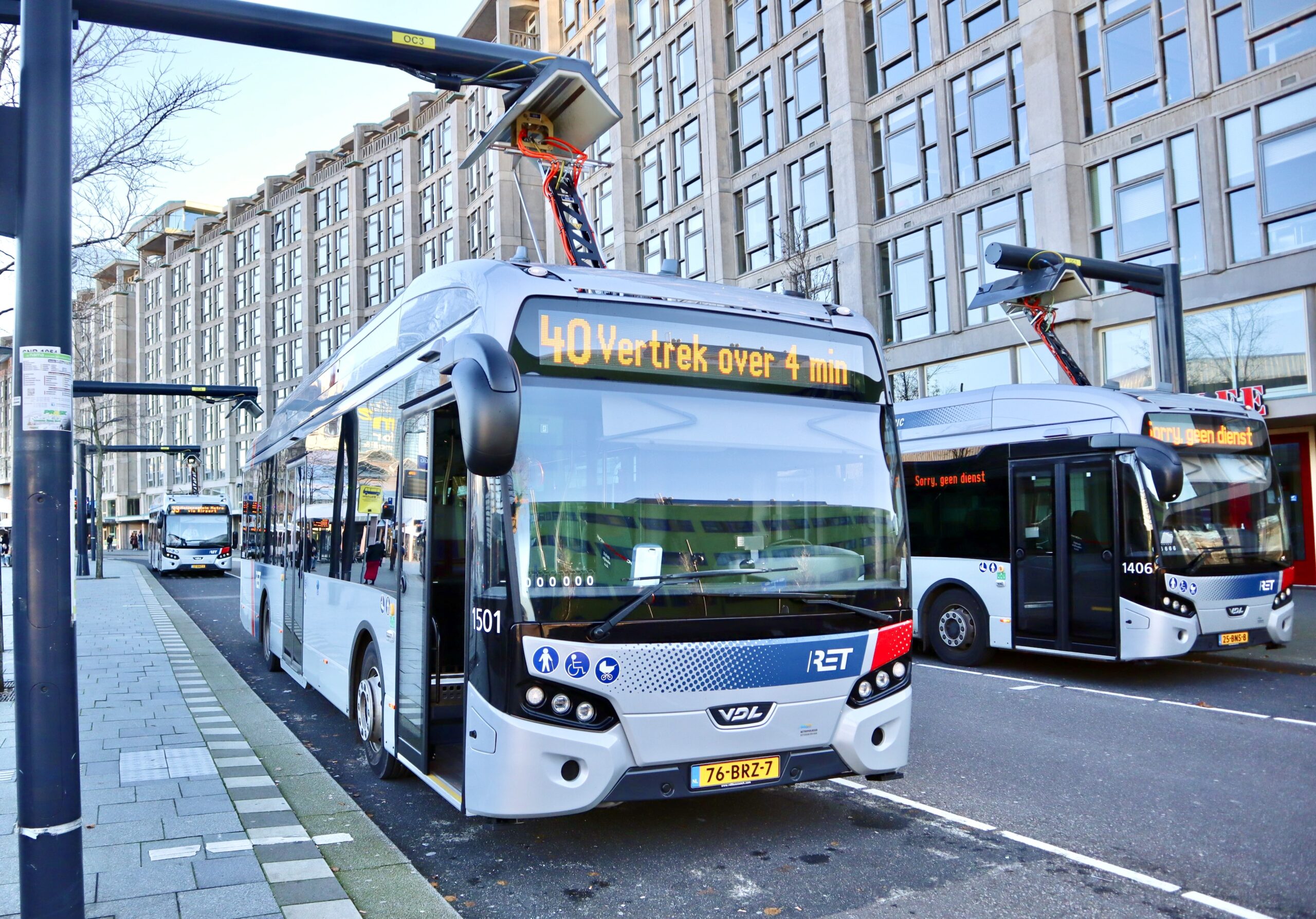
Rotterdam’s largest transport operator, RET, is also going all in on a cleaner fleet. By 2026, 124 electric RET buses will be running across the region. Because the buses can’t complete a full day’s service on a single charge, they top up during the day at rapid chargers on the street or back at the depot. RET has also acquired 103 full-hybrid buses, which are up to 40 percent more fuel-efficient than the current diesel fleet.
By 2030 RET will have replaced all its diesel buses with electric ones.
By 2030, RET will have replaced all its diesel buses with electric ones. They’re not only better for the environment, they’re also significantly quieter, making for a more comfortable journey. For road safety, the buses emit a sound when travelling below 30 kilometres per hour, so pedestrians and cyclists aren’t caught off guard by a silent bus.
Green electricity
All RET trams, electric buses, and metro trains run on 100% green electricity generated in the Netherlands, equivalent to the annual energy consumption of more than 40,000 households.
The rooftops of RET buildings are also covered in solar panels, including at metro stations Slinge, Rijnhaven, Zuidplein, and Maashaven. Energy from the metro network is even used to charge mobile machinery at construction sites, helping to take some of the pressure off the city’s electricity grid.
Electric shared cars
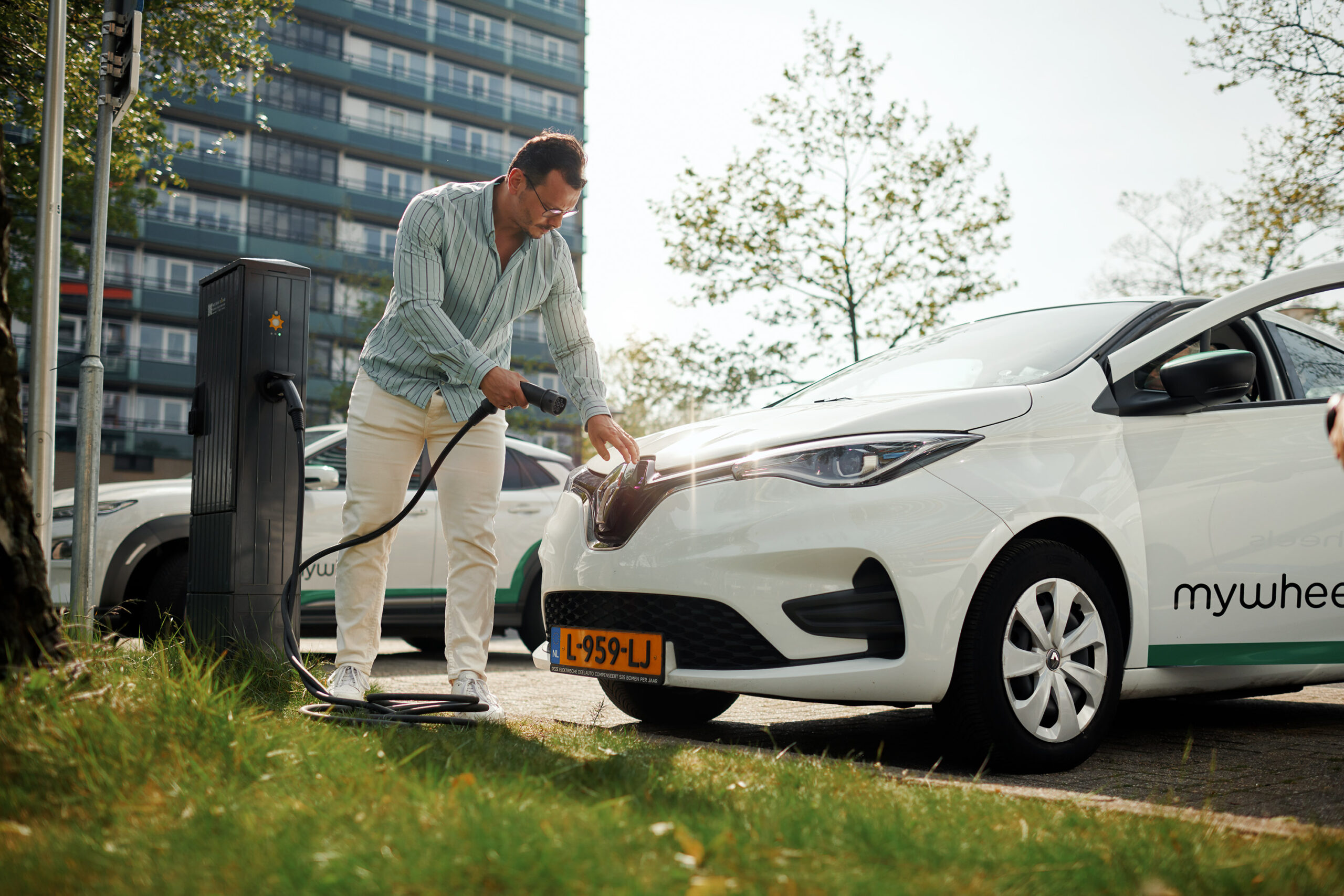
Shared cars are growing in popularity. Agreements have been reached with providers: all 520 shared cars with a parking permit are now emission-free.
To charge all those vehicles, there are 6,850 public charging points across the city, including smart charging plazas with rapid chargers and the option to feed electricity back into the grid. And at the Waalhaven truck parking, the first eight charging points for lorries are now in place.
Residents were challenged to leave their car at home for two months.
Mobility Challenge
Of course, the best option is to leave the car at home altogether. In the Hoogkwartier neighbourhood, a trial was run as part of the Mobility Challenge: residents were challenged to leave their car parked for two months and switch to shared transport instead, including electric cars, bikes, cargo bikes, and public transport.
The initiative gave residents the chance to consider making a permanent switch to shared mobility. On top of that, twenty parking spaces in the neighbourhood were permanently converted into green areas at residents’ request.
Climate Alliance
Rotterdam businesses are taking steps too. 150 major employers with more than 150,000 employees have joined the Climate Alliance for Sustainable Mobility. Their goal: a 50 percent reduction in CO₂ through less travel, more cycling, more walking, and the use of emission-free vehicles.
Hydrogen water taxi
Rotterdam wants all mobility to be emission-free by 2040. Mobility currently accounts for 30% of CO₂ emissions and 25% of air pollution. Half of all passenger transport is already emission-free, 12 percent of Rotterdam’s taxis run on electricity, and 40% of the city’s iconic water taxis, which zip across the Maas every day, are electric.
The absolute highlight: a hydrogen water taxi, a world first, showing that Rotterdam is home to the best and smartest port, and is working hard on becoming the cleaner city it aims to be by 2030.
Related brand partners

Media library for this story